
Pete Townshend believes Tommy resonates more powerfully today than it did upon its release 57 years ago — and he points squarely to social media as the reason.
The album’s narrative turns on a traumatic childhood rupture: young Tommy witnesses the murder of his father by his mother’s lover, reflected in a mirror. The shock leaves him psychosomatically deaf, dumb and blind.
Townshend sees a modern parallel in the digital environments children now inhabit.
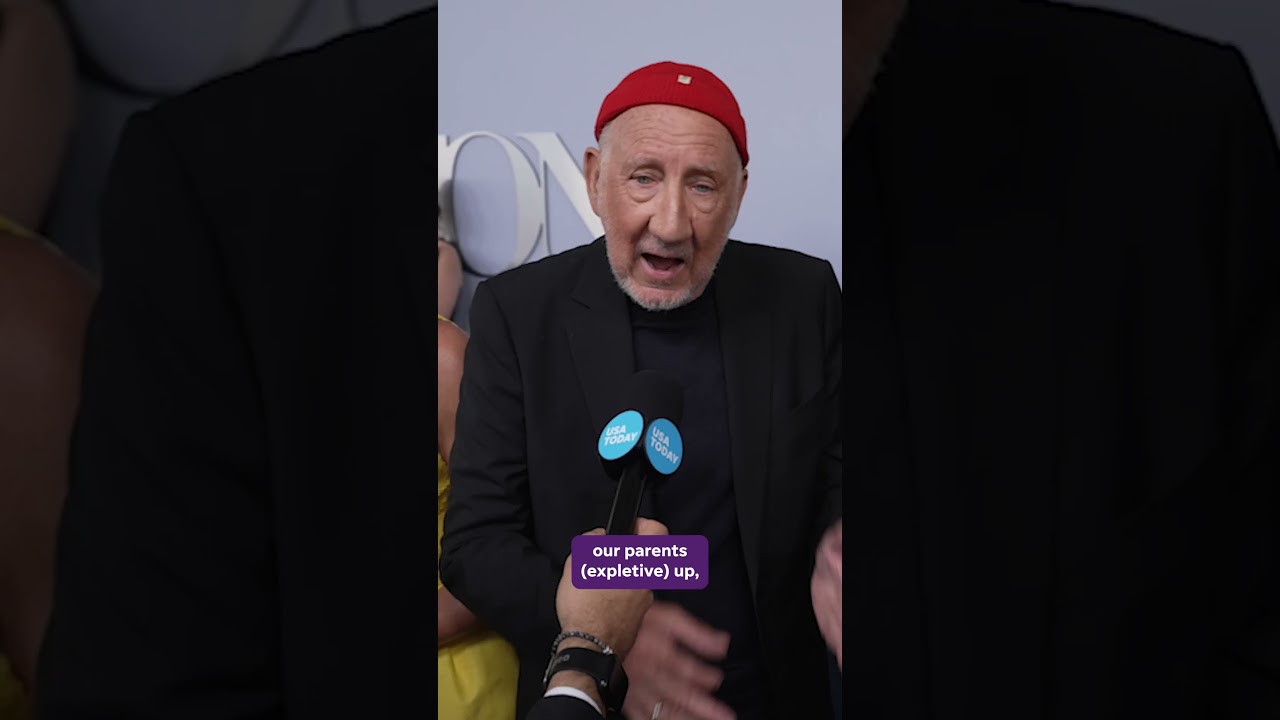
“So many issues that we deal with today, particularly with our kids living on social media,” he said in June 2024 on the red carpet at the Tony Awards. “The iPhones that we all look at now are like the mirror in Tommy. It's a very adept, a very succinct reflection of what it is that I feel we're facing today with kids growing up with tremendous anxiety, with suicide issues, and acting it out sometimes.”

Townshend originally conceived Tommy through the lens of his own postwar upbringing in Britain. Raised in the shadow of World War II, he has described a gray, emotionally constrained childhood in which children were often reminded of the sacrifices made by the previous generation.
Let's not leave our children to do whatever they want. They need to be guided and cared for.”
— Pete Townshend
His home life grew more unsettled after his parents separated, forcing him to live with a mentally unstable and abusive grandmother — a formative relationship he has frequently cited as both painful and complicated.
“You know, the story of Tommy was written when I was looking back at my post-war childhood, thinking, ‘Our parents fucked up,’ and it would be tragic to allow this to happen again,” he explains.
“We've had no war, but we've got climate change, we've got some big issues. Let's not leave our children to do whatever they want; they need to be guided and cared for.”
Tommy’s sweeping narrative arc marked a turning point for rock, helping establish the concept album as a serious artistic form. Townshend has said the project was partly born out of creative necessity after encountering Jimi Hendrix and his electric guitar talents.
“He came along and… just swept everything aside,” Townshend told Guitar Player in September 1989. “I had to learn to write, and it became like a new art, from a new angle.”
The album’s success — and its reputation as rock’s first true opera — led Townshend to revisit large-scale conceptual storytelling throughout his career. Most notably, he developed Lifehouse, an ambitious follow-up that anticipated elements of the internet and artificial intelligence (something he’s jokingly threatened to use himself). Though the project remained unfinished in its original form, many of its songs were issued as Who's Next.
Townshend returned to the material decades later, culminating in the 2023 release of Who’s Next/Lifehouse, an expansive 11-CD box set accompanied by a graphic novel that reimagines the story.

