
In the early ’80s, Bo Ramsey made a name for himself as a steady blues player with a penchant for tasteful slide licks. This led to the release of several solo records before Ramsey hooked up with Greg Brown for 1989’s One Big Town.
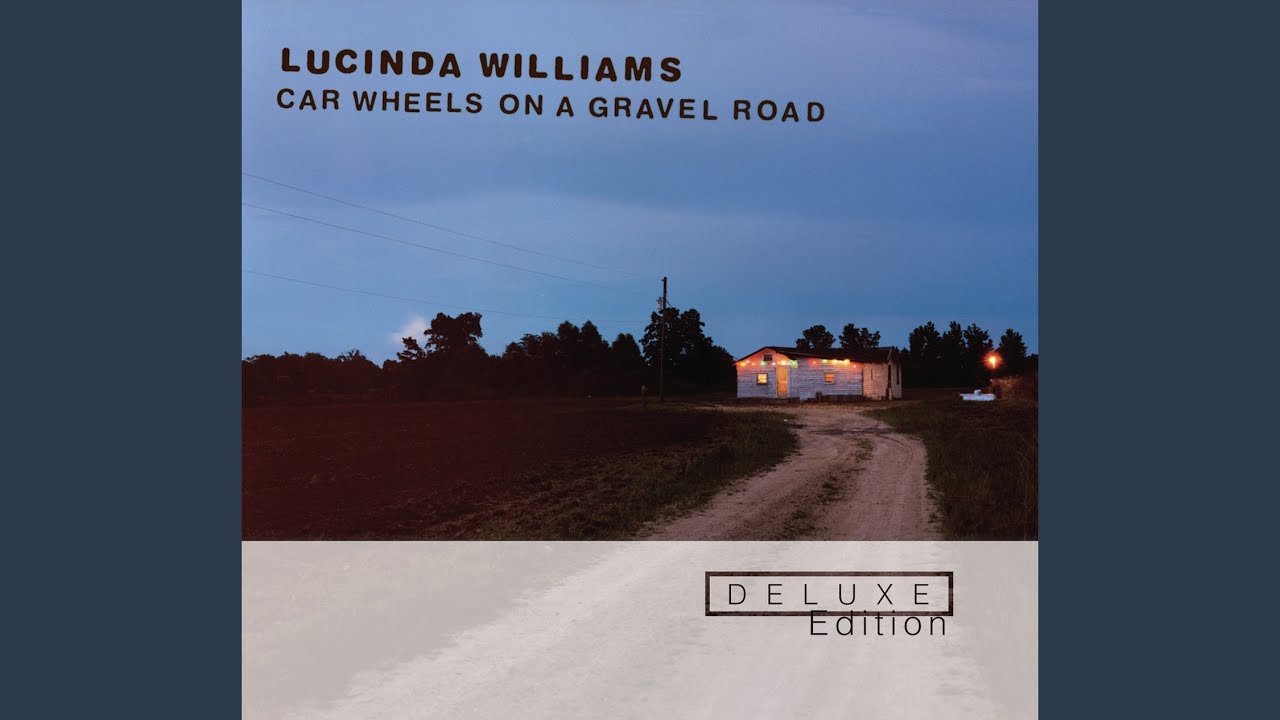
As the ’90s dawned, so did Ramsey’s musical relationship with Lucinda Williams, eventually leading to Ramsey being called in during the hectic—but ultimately fruitful—Car Wheels on a Gravel Road sessions. The story goes that Ramsey opened for Williams, leading to a friendship, but that’s not quite accurate.
“I didn’t actually open for Lucinda,” Ramsey tells Guitar Player.
“But later, I toured in her band after the Car Wheels sessions. I was invited to join after Car Wheels was released. Those were exciting musical times. Lucinda is a great songwriter, and working with her — both live and in the studio — led to connections with many other great artists. Music has a way of bringing people together.”

As for how Ramsey weighs his work with Brown against Williams, he shrugs. “It was fluid. The music all felt connected. The more comfortable I became with it, the more intrigued I was by the idea of being fully present and open to the music in the moment.”
After Car Wheels’ success, Ramsey stuck around as producer for Williams’ next record, 2001’s Essence. After that, the veteran guitarist toured with “Lu” for a year before continuing his solo work with Greg Brown and Brown’s daughter, Pieta Brown.
Though they have worked together since, Ramsey and Williams remain friends. “Lucinda and I have a real connection through the music,” he says. “It’s not something we ever had to talk about, really. It just happened.”
“Lucinda has a strong sense of what she wants,” Ramsey adds. “She can feel it when it’s right. She’s a real songwriter, so working with her was always about serving the songs.”

What inspired you to pick up the guitar, and what drew you to country, folk, and Americana?
What inspired me was all the music around me at the time. My dad had played guitar when he was younger, but he had stopped by then and left his guitar in a closet in the basement. That’s where I found it. I pulled it out and started trying to play. AM radio was everywhere then, and I listened to all of it.
I was also listening to AM radio, which felt like the musical voice of the time. It was incredibly open. People weren’t really talking about genres then.”
— Bo Ramsey
What sort of scene did you grow up in?
I lived on government property until I was 17. We were in a house within a large circle of homes near the building where my dad worked. Burlington, Iowa, was about 10 miles away, and I went to grade school in a tiny town called Middletown.
Later, I went to junior high and high school in Burlington, a Mississippi River town. We were bused in and out each day. I lived out at the plant — apart from town but still part of its own small community — and all of this was happening during the Vietnam War.
How did all that impact you musically, mentally, and emotionally as you were coming of age?
Both of my parents were from the South — my mom from Louisiana and my dad from Kentucky. So even though we lived in Iowa, there was a strong southern influence in our daily lives. I think that shaped me in many ways, including musically.
I was also listening to AM radio, which felt like the musical voice of the time. It was incredibly open. People weren’t really talking about genres then, and we didn’t think about music that way. It all felt wide open.

What led you to work with Greg Brown in the late ’80s?
The music led me to Greg Brown. I remember standing at the back of a club in Iowa while Greg played alone onstage and thinking—even before I knew him—that I could make music with him. Not long after that, we started doing shows together.
What gear and approach did you take?
Greg was playing acoustic guitar. When I first heard one of his early recordings, I could already imagine electric textures and drums around it. When we performed live, it was often just the two of us, and I came to that from playing in—and fronting—bands.
Greg has such a deep, natural groove that it was easy for our guitars to create one big sound. He would also change keys and even song structures at times, so I had to stay fully in the moment. I played electric guitar, trying to support the songs and his singing. He’s a beautiful singer.
What important lessons did you learn working with Greg Brown?
Greg always performed his songs in the moment. His delivery was fluid and changed from night to night. Over the years, that helped me grow as both a soloist and a sideman by teaching me how to fully give myself to the moment as a musician.
He’s such a deep songwriter. I came to understand that the best songs can shift shape from night to night and still remain true to their essence. Playing as a duo over the years also gave me a lot of room to explore tone, which for me is a never-ending pursuit.

You first met Lucinda Williams in the ’90s. Tell me about that.
I first met Lucinda at a small club in Nashville. She had come up from Austin, and I was visiting Nashville and had played a small gig with singer-songwriter Kevin Gordon. After the music ended, Lucinda showed up, and we connected.
Not long after that, I did a two-week writers-in-the-round tour with Lucinda, Gurf Morlix, RB Morris, and Steve Young, with Dub Cornett driving us. So I wasn’t opening for Lucinda, but that’s where we first connected musically.
I do remember Steve Earle saying while I was tracking, “I can just see the numbers and letters glowing on the tubes.”
— Bo Ramsey
How did meeting Lucinda change your career trajectory?
I toured in her band after the Car Wheels on a Gravel Road sessions. I was invited to join after Car Wheels was released. Those were exciting musical times. Working with her — live and in the studio — led to connections with many great artists. Music has a way of bringing people together.
When did you join the Car Wheels on a Gravel Road sessions?
I think I was called in toward the end of the recording. The only people I remember seeing there were Steve Earle and Ray Kennedy, the engineer.
What did you bring to those sessions?
I only played on a couple of tracks, toward the end of the sessions [“Can't Let Go” and “Joy”] “. I didn’t have any gear with me, so I borrowed a guitar and used the amp that was there. I do remember Steve Earle saying while I was tracking, “I can just see the numbers and letters glowing on the tubes.”
What were your impressions of the finished album?
Because I came in toward the back half of the session, I didn’t have a lot of context. But when the album came out, it felt very true to what I had heard while recording. I always thought Steve Earle did a great job as a producer on that record.
How did you come to play a bigger role on Essence?
I once told Lucinda, “If you ever need a record producer, I’d be honored,” and she called. We had worked together on a track after Car Wheels, a cover of a Greg Brown song called “Lately.” That track earned her a Grammy nomination for Best Female Country Vocal Performance in 2003, and I played on it and helped produce it.
Were the Essence sessions smoother?
I had been recording and mixing at a studio in Minneapolis called Master Mix. Engineer Tom Tucker was truly a master. Lucinda was intrigued, and we ended up recording and mixing Essence there. There was a lot of magic in those sessions.
Why didn’t you continue working with Lucinda?
I toured with Lucinda for a year after Essence. That felt right. I was also working with Greg Brown and releasing my own records, so the timing made sense.
What’s the latest with Pieta Brown and your solo work?
I’ve made quite a few recordings with Pieta Brown and toured extensively with her. She’s a magical artist and a strong producer. She has a new album, Dreamin’ Of, coming out August 21, 2026, on Righteous Babe Records.
I also played on a recent track, “Out of the Dark,” which I’m really proud of. Drummer and engineer Bryan Vanderpool was a key part of that collaboration.

What’s your approach to tone and gear?
I’ve been lucky to work with great engineers and builders along the way. In recent years I’ve focused on instrumental music, which has been inspiring.
I’m proud of an instrumental album called Wildwood Calling, recorded by Adam Krinsky and mixed by BJ Burton.
My main guitars include an early ’80s Fender ’62 Reissue Stratocaster, a ’58 Silvertone U1, a Jerry Jones 12-string, and an early ’50s Gibson LG-2. In the studio I’ve also used a 2013 Custom Shop Gibson Les Paul ’59, a ’60s Supro Dual Tone, a Mule Mavis, and a 1920s H. Weissenborn.
Any advice for young players?
Listen—and listen to the blues. Stay open-minded. And open-hearted. No regrets.
