

James “Blood” Ulmer once recalled growing up in South Carolina, where he was exposed to two kinds of blues.
“Down South we had two kinds of blues,” he said in a 1990 interview with Guitar Player. “One that was forbidden, and one that wasn’t.”
The young Ulmer was particularly drawn to the music of a local guitarist named Johnny Wilson.
“Mr. Johnny Wilson would play some shit on the guitar that would make you wanna fuck,” he recalled. “Every time I’d tell Mama, I’d get my ass beat just for listening to Johnny Wilson.”
Another local musician, Alton Smith, played a gentler style that earned the approval of Ulmer’s mother. Yet it was Smith’s approach that lingered longest in the future guitarist’s mind.
“He would accompany himself so that you wouldn’t think that what he was playing was it,” Ulmer said. “You could always imagine something else.”

Ulmer, who died June 3 at the age of 86, spent the next six decades building a body of work defined by that very idea — music that suggests more than it states. Through his fusion of blues, free jazz, funk, and Ornette Coleman’s harmolodic philosophy, he developed a guitar language that influenced generations of musicians while earning a reputation as one of the instrument’s most original voices.
Critics struggled to categorize his music. His records drew from gospel, Delta blues, jazz, rock, and funk, often simultaneously, producing a raw, angular style that resisted any single label. In 1982, Newsweek called him “the most original guitarist since Jimi Hendrix and Wes Montgomery.”
“Mr. Johnny Wilson would play some shit on the guitar that would make you wanna fuck. Every time I’d tell Mama, I’d get my ass beat just for listening to Johnny Wilson.”
— James “Blood” Ulmer
Yet the origins of Ulmer’s approach lay far from New York’s avant-garde scene, in rural South Carolina.
Born in St. Matthews, Ulmer began playing guitar at age seven in his father’s gospel quartet, the Southern Sons. He sang baritone and learned the discipline of performing in church long before encountering jazz or experimental music.
“My father instigated the whole deal,” Ulmer recalled in a 1990 interview. “All I did was follow orders.”
The church provided structure, but the blues provided revelation. After graduating from high school in 1958, Ulmer headed north to Pittsburgh, where he performed with vocal groups including the Savoys and the Del-Vikings, the pioneering interracial doo-wop group known for hits such as “Come Go With Me” and “Whispering Bells.”
In Pittsburgh, he encountered a teenage guitar prodigy named George Benson.
“Every time he sees me, he reminds me that he used to teach me to play the guitar, and he actually did,” Ulmer said years later.

Though rooted in gospel and blues, Ulmer absorbed a new musical vocabulary from Benson, including modern jazz guitar styles associated with players such as Grant Green and Kenny Burrell. Those lessons expanded his harmonic and rhythmic thinking and pointed him toward more open-ended forms of expression.
By the early 1960s, Ulmer had relocated to Ohio, where he formed Blood and the Bloodbrothers and worked with organist Hank Marr. He later moved to Detroit, a city he described as both demanding and formative.
A drone is like a key to me. You’re in unison; you ain’t got no chords. But you can move the tonal center of the guitar.”
— James “Blood” Ulmer
“Detroit was a tough music town,” he said. “Full of very musical people.”
There, Ulmer began developing the guitar approach that would define his career. Working with a band called Focus Novii, he experimented with freer improvisation and what he called “unison tunings,” in which multiple strings are tuned to the same pitch or octave. Rather than traditional chordal harmony, the approach emphasized drones, open intervals, and shifting tonal centers.
“A drone is like a key to me,” Ulmer explained. “You’re in unison; you ain’t got no chords. But you can move the tonal center of the guitar.”
That concept became central to his musical identity. Combined with thumb-picked attack and blues phrasing, it produced a sound that felt both archaic and forward-looking at once.

Frustrated by the limitations of Detroit’s club circuit, Ulmer eventually moved to New York and entered the city’s jazz underground. He secured a residency at Harlem’s Minton’s Playhouse and began working with drummer Rashied Ali, whose polyrhythmic approach pushed his playing into new territory.
Ali eventually introduced Ulmer to Ornette Coleman.
The saxophonist was immediately impressed.
I moved in with Coleman and studied his harmolodic theory for a year.”
— James “Blood” Ulmer
“I moved in with Coleman,” Ulmer recalled, “and studied his harmolodic theory for a year.”
Coleman’s harmolodic concept aimed to free melody from fixed harmonic hierarchy, allowing greater musical equality and improvisational freedom. Ulmer later emphasized that he had already been moving in that direction independently, but Coleman provided an articulated framework.
Ulmer became one of the key interpreters of harmolodic music, translating its principles into a distinctive guitar language that helped shape the emerging jazz avant-garde of the 1970s.
That role was cemented with a series of landmark recordings beginning with 1978’s Tales of Captain Black, featuring Coleman and bassist Jamaaladeen Tacuma. The album — which established his identity with a Gibson Byrdland electric guitar — introduced a wider audience to Ulmer’s aggressive, open-ended approach.
Its follow-up, Are You Glad to Be in America?, expanded the palette further, blending funk, free improvisation, and political edge into a sound unlike anything else of the era.

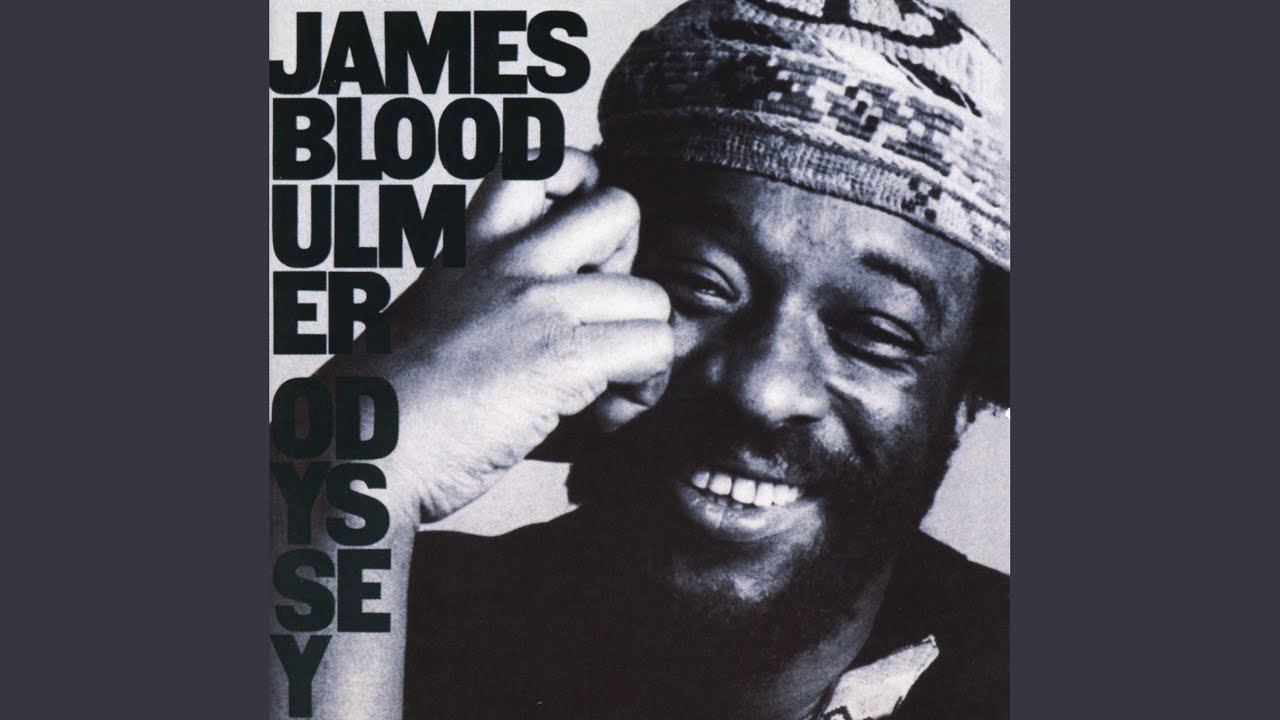
Throughout the 1980s, Ulmer continued to refine his vision on albums including Freelancing, Black Rock, and Odyssey. The latter, featuring drummer Warren Benbow and violinist Charles Burnham, was named Album of the Year in The Village Voice critics poll and is widely regarded as a high point in his discography. The 1980s also saw him adopt the Steinberger guitar — notably featured on his album Blues Preacher — for its unique solid-body tone and stability.
Despite critical acclaim, commercial success remained limited. Ulmer’s music resisted categorization, existing between blues, jazz, rock, and the avant-garde. Still, his influence steadily expanded.
Through projects such as Music Revelation Ensemble and Phalanx, along with extensive touring in Europe, Japan, and the United States, he became a touchstone for younger musicians drawn to his refusal to compromise.
In the end, Ulmer’s career returned to the insight he first encountered as a child — music as possibility rather than conclusion.
As he put it, “You could always imagine something else.”
Few musicians committed more fully to making that idea audible.
