

Mick Jagger has opened up about his friendly rivalry with David Bowie — and the period when he believes the late songwriter was at “his most Stones-y.”
The two artists emerged from the London rock scene in the mid-to-late 1960s, with the Rolling Stones scoring their first chart success in the wake of the Beatles’ breakthrough and Bowie launching into the mainstream with 1969’s “Space Oddity.”
They remained close throughout their careers, and Jagger says Bowie’s competitiveness brought out the best in both of them.
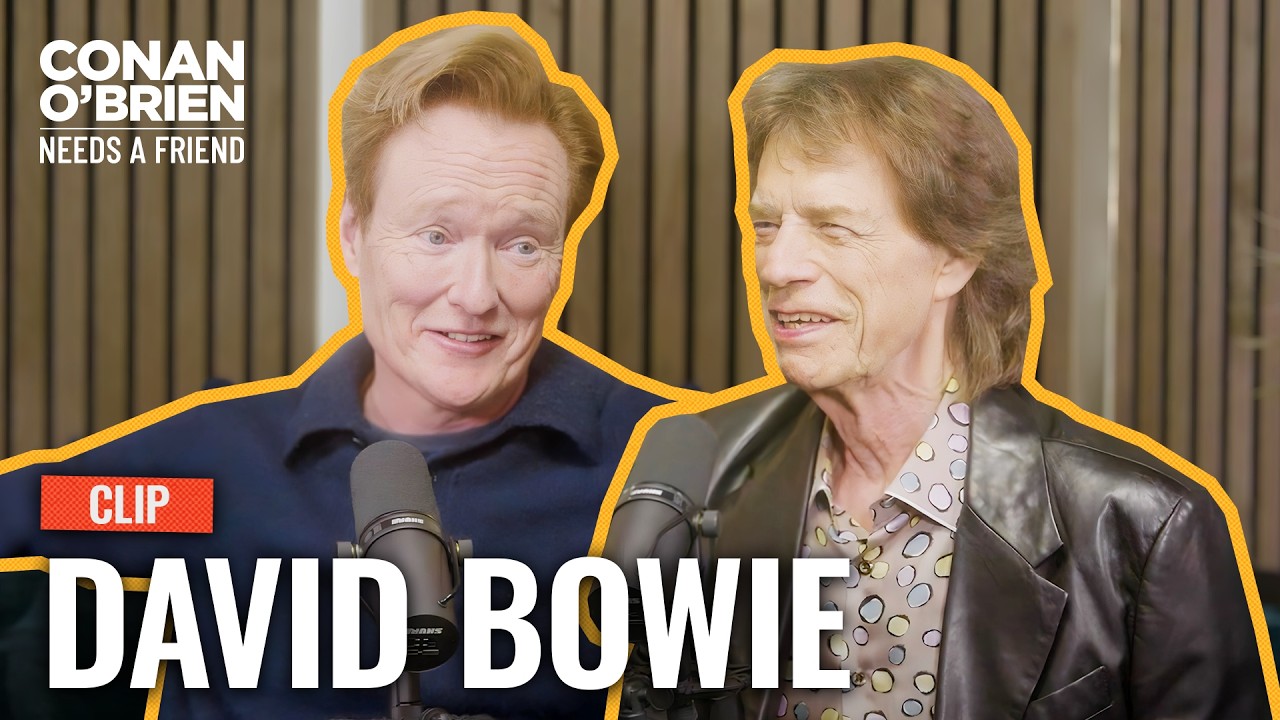
“We were competitive. David was so competitive,” Jagger tells Conan O’Brien. “I was made competitive by David — I had to be competitive back.”
Unlike Jagger, who has maintained the image of a swaggering, sharp-tongue blues rocker throughout his career, Bowie shed his skin constantly, changing personas from Ziggy Stardust to the Thin White Duke and many other incarnations.
But there was one period when Jagger felt Bowie was getting particularly close to the Stones’ sound.
“There isn’t one David Bowie. There’s kind of like a slowly evolving David Bowie, [and] there’s jump cuts,” Jagger says. “When he was doing ‘Jean Genie’ [from 1973’s Aladdin Sane], he was very Stones-y, you know? That was a very Stones-y period.
“So he would come over and play me ‘Jean Genie,’ like ‘Do you wanna listen?’”
Naturally, Jagger was keen to hear the track. And he immediately recognized some familiar influences, including Mick Ronson’s Keith Richards–inspired electric guitar riffing.
“I said, ‘God, you nicked all my things’” Jagger says with a laugh. “[And he said], ‘Yeah, I know, man. But it’s like an homage to you.’”
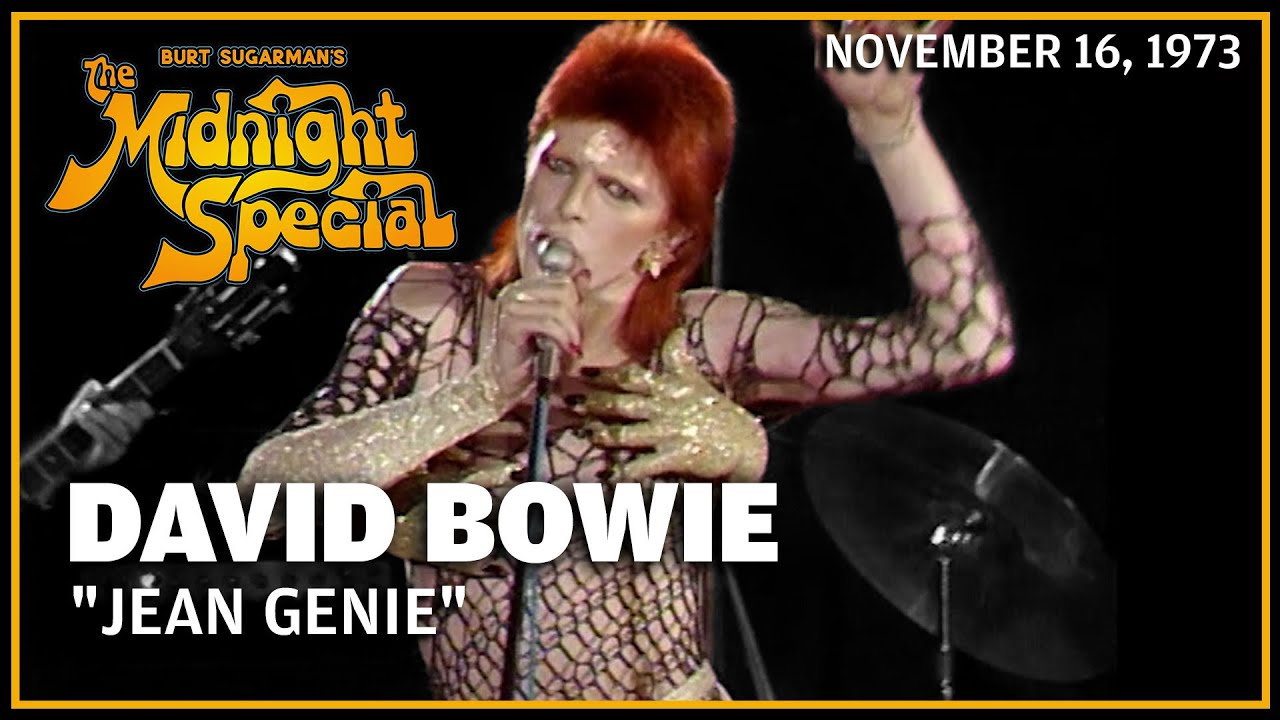
Bowie didn’t mention Jagger when discussing the song’s origins in his 2002 book, Moonage Daydream: The Life & Times of Ziggy Stardust; he cited Iggy Pop and American actress Cyrinda Foxe as inspirations. But he did acknowledge the Rolling Stones’ influence on the track.
“I wanted to get the same sound as the Stones had on their first album on the harmonica,” he said. “I didn’t get that near to it, but it had a feel that I wanted — that ’60s thing.”
And Bowie didn’t stop there. Aladdin Sane also featured his adrenalized take on the Stones’ “Let’s Spend the Night Together,” further supporting Jagger’s contention that Bowie was in a particularly Stones-y phase.

More than a decade later, the pair would turn their friendly rivalry into an actual collaboration. In 1985, Jagger and Bowie recorded a cover of Martha and the Vandellas’ “Dancing in the Street” to raise money for Live Aid’s famine-relief efforts.
The song became a major hit, but the accompanying video captured something that the track itself couldn’t quite contain: two of rock’s biggest stars hamming it up, dancing through the streets and looking like they were having an absolute blast trying to outdo the other.
![David Bowie & Mick Jagger - Dancing In The Street (Official Video) [4K] - YouTube](https://img.youtube.com/vi/opRRax4ph3E/maxresdefault.jpg)

