
A great many descriptors have been used for Robin Trower and his playing since he emerged as part of Procol Harum back in 1967.
Slack has never been one of them.
With his signature Stratocaster and endless vocabulary of solos, the London-born guitarist, songwriter and bandleader has released more than three dozen studio albums as a principal artist — including the short-lived BLT trio with Jack Bruce and drummer Bill Lordan — plus session work for Bruce and Bryan Ferry. During the past decade alone, he’s delivered eight albums, including collaborations with Maxi Priest and blues singer Sari Schorr — a remarkable output by any measure but all the more remarkable when you consider that Trower turned 81 in March and is still producing at a volume that’s leaving those half his age, and younger, in the dust.
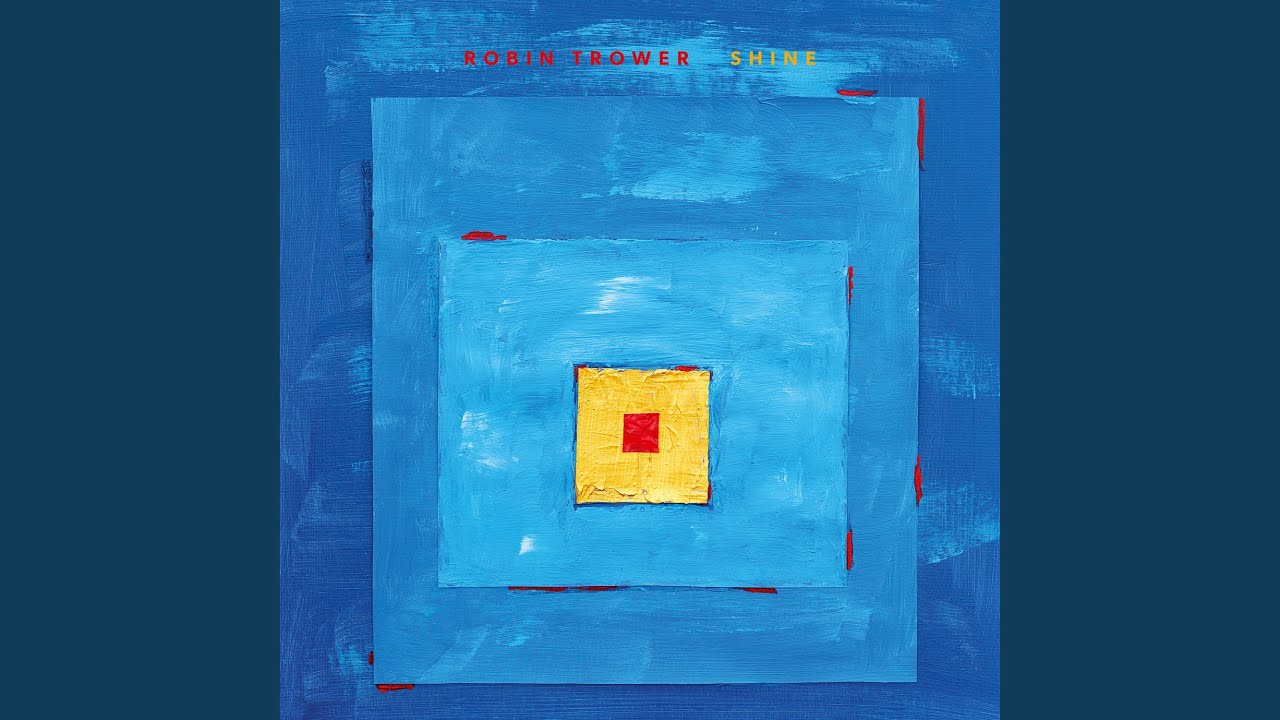
The latest entry in the Trower travelogue is Shine, a 10-track set that came out September 25 that was produced by Trower, who also played bass as well as guitar, joined by drummer Chris Taggard, with Richard Watts, mostly, on vocals, as well as Jeff Hayes. Mining a familiar but hardly worn array of rock, blues, soul and some funk, it’s an album Trower had spoken about finishing around the time its predecessor, 2025’s Come and Find Me, came out. As he spoke to Guitar Player from Florida at the outset of his latest U.S. tour, it doesn’t sound like he’ll be taking his foot off the pedal — wah-wah or otherwise — any time soon.
Shine is an album you were talking about when Come and Find Me came out just 16 months ago. Do you feel like those, and maybe all of the albums you’ve been releasing in pretty rapid succession, are of some kind of a piece you’re creating?
I think the point behind it all, really, is I’m coming up with a lot of material, so in a way I’m always working on a couple of albums at the time. Then when the time comes for me to put an album out, I have to choose from a certain amount of songs, a group of songs that I think work together. But there’s always extra songs that will go toward the next album.
That has to be a reassuring way to work, making music more than making albums.
That’s right, yeah. Each song is treated as an individual, and I then try to put together a bunch of songs that I feel do hang together — hopefully from a lot of choices that are around.
I think I’ve concentrated more on working, just making sure I play the guitar every day, and that’s where ideas come — when I’m sort of doodling about.”
— Robin Trower
So how large of a universe did you draw Shine from?
I think I had about six other songs that didn’t make it on this album; they just didn’t quite fit in this group. So they’ll go forward, and I’m working on a lot of new material since then, of course.
What accounts for your level of recent productivity? There aren’t many, maybe any, peers of your age that compare.
There’s no doubt about it; I have hit a bit of a purple patch the last few years. I think I’ve concentrated more on working, just making sure I play the guitar every day, and that’s where ideas come — when I’m sort of doodling about. An idea will present itself, and as long as I think I can keep working I can come up with new material.
Do you have a process you follow at this point?
Every song I write starts off with a guitar idea, basically; that is the formula. I get a guitar idea that I think could be turned into a song. I’ll work on it for an hour, and if it’s gonna be good it’ll be pretty much together by the end of the hour.
I know when a line, a guitar line, is gonna be good because it rings a bell in my body. I just know that’s what I’m looking for. Then I start to think about the top line, what the vocal line will be, and once I’ve got that nailed down I’m also working on lead guitar ideas, and melodies as well. Then I start to work on the lyrics. That is the longest part of the process; that can take me two or three days, to finish the lyrics.

There are probably some songwriters out there who will read that and think two or three days is not a long time.
[chuckles] Yeah, that’s lovely. I mean, I have taken longer than that, but not always. The ultimate sort of goal of a lyric is that it enhances the atmosphere of the song itself and fits right into the mood of it. But if you can’t reach that kind of goal, then at least have a lyric that doesn’t detract from it.
Shine and your other recent albums, certainly Come and Find Me, seem to be digging a little deeper, lyrically. There are songs about politics, mortality. Is that part of being a man of a certain age and having more experiences to draw from?
I think my whole approach has always been and always will be that the best is yet to come as far as my work is concerned.”
— Robin Trower
I think that’s true. I think what’s happening in the world has impacted the lyrics the last few years, there’s no doubt about it. The world is unfortunately in a much darker place at the moment. I think that gets into it. Obviously you’re going to express your worries, fears, whatever.
On “Live Your Time” on Shine, however, you strike a more optimistic tone even in that environment.
I think that’s more or less saying, “Well, we can worry ourselves to death and worry about those things we can’t really change,” and I think that lyric is just sort of pointing out that you’ve got to love yourself and live your time. That’s it — make the very most of it. Obviously we have to be concerned, but not to the detriment of our own lives. And eventually we have a moment for us to make a difference.
“The Race,” meanwhile, sounds pretty defiant — again, a kind of statement from a man of a certain age.
I really believe that. You’re always looking forward — and happy about it. If you had asked me in the ’70s, there’s no way I thought I’d still be doing it at 81. But I’m thankful for my blessings every day, so that’s it. You try to make the most of it.
What do you find you can do now, through the benefit of knowledge and experience, that you couldn’t have 40 or 50 or more years ago?
That’s a good point, because I think I try and be more organized and not quite so gung-ho as I was when I was starting out. I think now I’m more interested, for instance, in lead guitar being more melodic, having actual melodies. Obviously I still want to make it passionate and soulful, but I think that would be the difference between then and now, more melody.
Has the litmus of what works changed for you much over the years? Is it easier or harder to reach that bar you aspire toward?
I think both. Experience is a big, big help, because you bypass all the sort of clutter to get to the point, and the point is always further down the road, unfortunately. So you’re always chasing what you’re after, but that’s all part of the fun of the fair, isn’t it? When you give up is when you don’t feel like you’re growing or coming up with something fresh. The most important thing is to come up with something fresh to you, something you haven’t created before. A lot of the ingredients are very similar to what you did before, but it has that little something about it that piques your interest.
What did that in particular on Shine?
Well, “Love By Any Other Name” is maybe one of the best songs I’ve ever written. I’m fascinated by that track. It’s deep, for a start; it’s a deep piece of music. It’s also got a fabulous vocal on it by Richard. I think that combination gives it a potency which...it’s fascinating.
Any different gear on this album?
It’s all basically the same stuff I always use — my signature model Strat, Marshall amps and all the pedals from Fulltone. They keep giving me pedals since the early ’90s, and I’ve always used them since then.
As Paul McCartney once asked Elvis Presley, how are you coming along on the bass, then?
The reason I play bass is because when I’m writing I usually have in the back of my mind what the bass and drums should be doing. I’m not saying I’m a great bass player or anything, but I think the parts are key, coming up with the right part that suits the vocal, suits the guitar parts. I think that’s why I like to do the bass myself.
You released anniversary editions of some of your albums recently, like Bridge of Sighs, For Earth Below, the first Live! album. Do those at all impact on new writing and recording you do?
No, I don’t think so. I’m not one for looking back; most of those albums I haven’t heard since I made them. So, no. You just keep moving forward. You don’t want to get hung up on what was successful earlier; it might impact on what you’re trying to create, or can create.
What keeps the older songs fresh for you in concert?
I think that’s the great thing about being a three-piece — every song is a challenge every night. That’s all there is to it; you’ve got to work hard to pull them off, basically. I think that’s what keeps it on its toes. That keeps it alive.
Is a next album in motion, or even finished?
No. I’m working on something at the moment; I have a lot of spare material, but I haven’t got it pinned down to what it’s gonna be yet. I’m gonna be doing a little more recording, I think, in November, and then take some time off and come back to it in the new year.

