




GuitarPlayer Verdict
The Death by Audio/Rainger FX Amp Crash is a wildly inventive hybrid of three-watt solid-state mini-amp, drive pedal, microphone and effects unit. Rather than chasing authentic vintage tube tone, it excels at creating abrasive overdrive, fuzz, feedback and atmospheric textures. Its internal mic captures both the built-in speaker and external amps, producing semi-controlled sonic chaos, while reverb, echo and chorus expand its possibilities. It also proves surprisingly effective as a recording-friendly mini-amp through an extension cabinet.
Reasons to buy
- +
An incredibly inventive feedback generator and soundscape crafter, offering near-unlimited creative potential
Reasons to avoid
- -
It might be a little too wild and raw for those seeking more traditional cranked-amp sounds
You can trust Guitar Player. Our expert reviewers spend hours testing and comparing guitar products so you can choose the best for you. Find out more about how we test.
There are few more creative pedal makers working today than Queens, New York’s Death by Audio, although London’s Rainger FX might come close. Get the two collaborating and you can expect the result to be a wildly inventive device like the new Amp Crash. Part drive pedal, part mini-amp, it’s an inspiring noise-making tool for guitarists who like to push their sound to the edge.
Tapping cranked-amp sounds at a range of restricted volumes has been one of the more persistent goals of the electric-guitar community. While the Amp Crash might outwardly seem a reply to that conundrum, it’s far more.
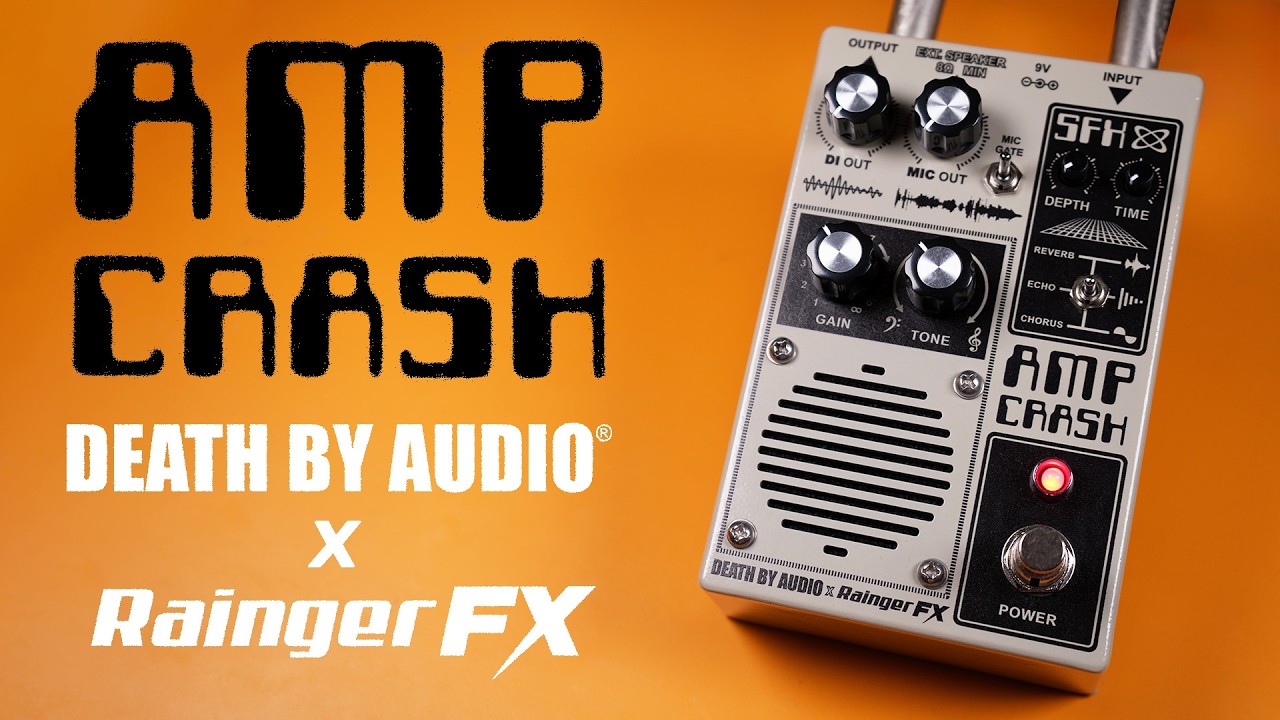
In short, it feature a three-watt analog/solid-state amp, a two-inch speaker and a microphone in a box measuring approximately six by four by three inches and weighing around one and a half pounds. The internal mic picks up the sound of the internal speaker and routes it into your signal and on into any external amp. But it will also pick up the external amp’s signal as well. And that’s where the fun begins.

The Amp Crash has controls for gain and tone, as well as for DI out (the DI-tapped amp signal) and mic out, with an on/off switch for a mic gate control. There’s also a built-in digital effects unit with a three-way toggle switch to select reverb, echo or chorus, all of which share controls for depth and time.
Joining the single input and output jacks is an external speaker jack that lets you connect a larger extension cab with a rating of at least eight ohms. Alternatively, connecting a dummy plug or cable into this jack disables the internal speaker while keeping the mic output live, so it still picks up sound from the amp connected to the output. It’s all powered by an external nine-volt DC adapter rated to supply at least 300mA. A traditional foot switch turns it all on and off, bypassing the input signal directly to the output.
While all of that seems straightforward enough, I found it hard to get my head around this unit’s full potential until I started using it. And it’s worth noting that it’s easy to misinterpret the Amp Crash’s intentions if you’re not thinking outside the box.

The design is like putting a cheap, pocket-sized solid-state amp into a box with an equally cheap microphone. That is, you’re not getting cranked-vintage-tube-amp tone out of this thing, nor should you expect it.
The Amp Crash gave up the best of its goods once I started treating it like a busted and abused amp that’s part of a bigger signal chain
What you do get is a surprisingly versatile bundle of noise-crafting and soundscape-creating possibilities. In my tests, the Amp Crash gave up the best of its goods once I started taking its name at face value and treating it like a busted and abused amp that’s part of a bigger signal chain.
I tested it using a 1959 Gibson Les Paul Junior with a single P90 pickup and a new ES-335 with humbuckers. I first tried it on its own as a ratty mini-amp-with-effects.
That was plenty of fun, but the Amp Crash showed its stuff when injected into Matchless Spitfire 1x12 combo and a ’64 Bassman head and 2x12 cab. Used as a drive pedal, it generated everything from subtly edgy overdrive to raspy, ratty, all-out fuzz-like sounds.

Taking that a step further quickly revealed this gizmo’s strength is in generating bountiful, ambient, semi-random yet semi-controllable feedback. Add in any of the three basic, yet rich and juicy effects and the howling, hovering textures broaden exponentially. Echo is arguably the most effective at this, and can be twisted into self-oscillation with the depth and time knobs rolled up. But I was fully hypnotized by the reverb and chorus effects, too.
Add in any of the three basic, yet rich and juicy effects and the howling, hovering textures broaden exponentially.
Obviously, given the uncontrollable nature of such feedback, it’s something you’ll have to work with on the fly, especially on a live stage. But that’s part of the fun and what makes this such a creative tool. It’s also worth noting that there’s no blend or mix control — it’s all or nothing, varied in degrees of intensity according to the DI out and mic out controls.
I also tried the Amp Crash purely as mini-amp by patching the speaker output to an extension cab with a single 12-inch Eminence L12-40A. While I thought at first the Amp Crash in this context was a novelty at best, after working with the settings I found plenty to love in this usage too. This little three-watt solid-state circuit overdrives extremely easily. It really shines with the gain at around 2 o’clock or beyond and the tone high (to retain brightness). Roll down your guitar’s volume control for semi-clean tones and crank it up again when you want to roar.

Here I found no end of delectable overdrive sounds in the realm of the cranked tweed Champ or other single-ended (and perhaps semi-fried) vintage practice amp, and the Amp Crash would make a fantastic recording tool via this route alone. Add the output signal dialed to taste into another amp and you can still induce creative feedback sounds thanks to the internal mic remaining on even when its two-inch speaker is muted.
As I’ve said about other Death by Audio creations, this is an amazingly cool pedal that will undoubtedly open plenty of new sonic horizons for many creative electric-guitar players. And I’m sure I’ve barely begun to scratch the surface of what it can do.
CONTACT Deathbyaudio.com
PRICE $395 street
CONTROLS Knobs for gain, tone, DI out, mic out, FX depth and time; three-way reverb/echo/chorus switch; mic gate switch; foot switch for on/off
EXTRAS Input, output, external speaker out, center-negative 9V DC adaptor input (300mA min)
SIZE 6"x3.75"x2.85" (including feet and knobs)
ASSEMBLED USA
PRO An incredibly inventive feedback generator and soundscape crafter, offering near-unlimited creative potential
CON It might be a little too wild and raw for those seeking more traditional cranked-amp sounds

