

U2 have spent five decades releasing hit albums, playing to enormous audiences and collecting 22 Grammy Awards. But for guitarist The Edge, the reason to keep going is remarkably simple: he believes the band’s greatest work may still lie ahead of them.
“We genuinely think that we might just write the best song we’ve ever written next week, or do the best show we’ve ever done next tour,” The Edge says in a new interview with The New York Times.
The band are preparing to release Carnaval De Luz on November 13, their first full-length album of new material since 2017. The interview with The Edge and frontman Bono looks back at the group’s beginnings in Dublin, when singer Paul David Hewson (Bono), guitarist David Howell Evans (The Edge), bass guitarist Adam Clayton and drummer Larry Mullen Jr. were teenagers, and considers what has kept them together half a century later.
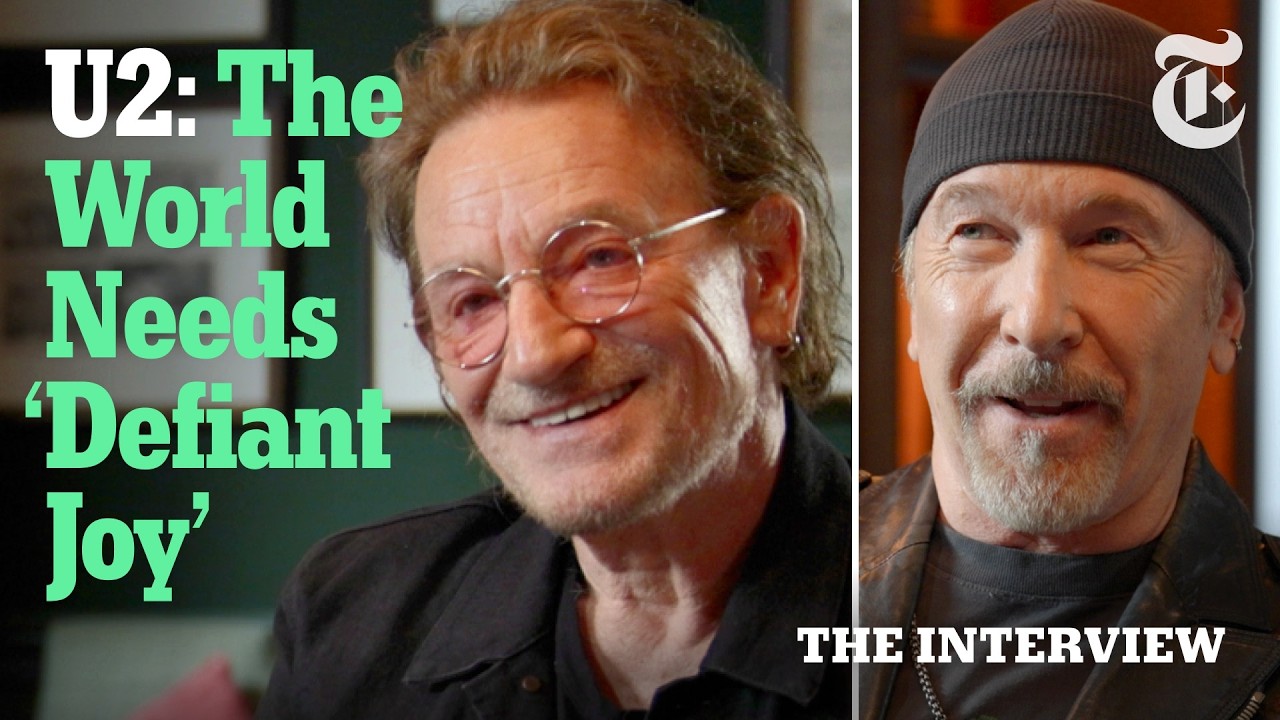
For Bono, the band’s identity has always carried a mythic dimension. He traces that impulse in part to the names he and his bandmates adopted in their early years, taking inspiration from the Ramones, whose members performed under pseudonyms.
“We wished to escape suburbia and discover these other selves, and we gave those other selves names,” Bono says. “The Ramones were key for us, and they are really well-drawn characters.”
But the names weren’t all about constructing larger-than-life rock stars. As The Edge recalls, humor played an equally important role in the band’s early identity.
“We laughed a lot at that age,” the guitarist says. “We would laugh at each other and ourselves and that was the deal. So the names were not necessarily designed for their heroic aspect.”

He then reveals just how far the group’s early nicknames were from the grand mythology Bono describes.
“Bono’s very first name was in fact Steinrich Van Haitian Bang Bang Bang, and then I was Inchicore for a while before I became The Edge. Adam for a while was known as Mrs. Byrnes, and Larry for some reason was the Jam Jar. We were borrowing a lot from Monty Python.”
Whatever the origins of their stage names, U2 went on to become one of the world’s most successful rock bands. The Edge, meanwhile, developed into one of rock’s most distinctive electric guitar stylists, building a minimalist, texture-driven sound around the rhythmic interplay of digital delay effects.
Yet he says the band’s ambition remains rooted in the possibility of doing something better than they have done before.
And for him, that means more than writing another hit or mounting another spectacular tour. He measures the band’s achievements against what he would want to experience as a fan, particularly when music reaches beyond entertainment and engages with larger ideas.

“When we talk about the best, we’re not thinking about rock ’n’ roll,” he says. “We’re thinking about our favorite bands and what, if I’m in the audience at a show, would I want to see and hear. So it’s where rock ’n’ roll collides with activism, where rock ’n’ roll collides with ideas from fine arts.”
The guitarist also points to the spiritual dimension of the band’s work, a quality he believes has been central to U2’s identity rather than something to be kept separate from their music.
“And I suppose a transcendent aspect as well. We’ve never thought it was necessary to hold back our own spiritual quests and questionings from our work. They are all expressed. And when we hit a song that has a transcendent quality, that’s the peak for me.”
Even after 50 years, The Edge hasn’t lost faith in what U2 can accomplish next.
“I really think we’re in with a shout of the best songs we’ve ever written, the best tours we’ve done, still. That’s why I’m still in this band.”
