
Few guitarists have developed a sound as distinctive as David Gilmour. But the Pink Floyd legend has always been open about the players who helped shape it.
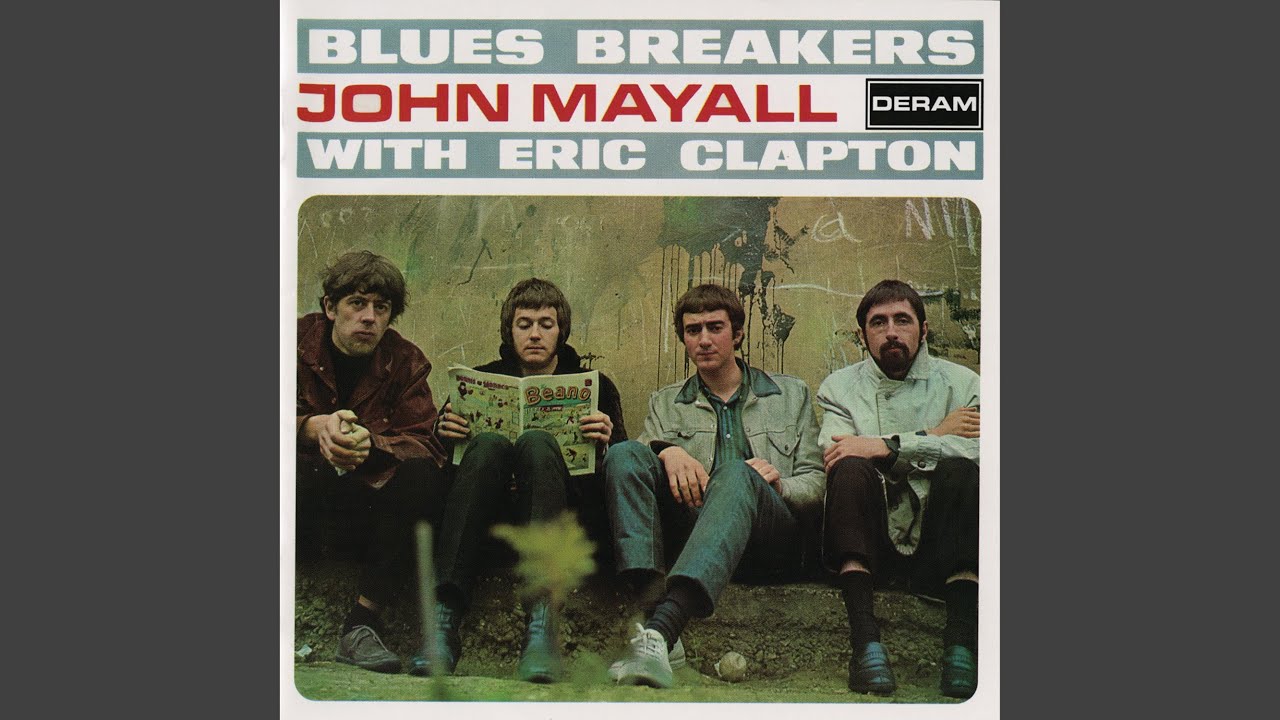
While Gilmour would eventually become known for his lyrical phrasing and expressive bends, he spent his formative years studying the guitarists he admired. One album, in particular, became an important part of his education in electric-guitar playing: Blues Breakers with Eric Clapton.
Released in 1966, John Mayall & the Bluesbreakers’ landmark album captured Eric Clapton at the forefront of Britain’s blues boom following his departure from the Yardbirds. Combining blues standards like Freddie King’s “Hideaway” and Robert Johnson’s “Ramblin’ on My Mind” with originals such as “Double Crossing Time,” it became essential listening for aspiring guitarists — including a young David Gilmour.

Gilmour has often said he was never interested in building his reputation on speed. Instead, he gravitated toward the melodic playing of the Shadows’ Hank Marvin. But when it came to developing his blues guitar vocabulary, Clapton’s work with John Mayall proved just as important.
“All of those guys were incredible,” Gilmour once said. “I spent time trying to learn how to play their licks perfectly. I would suggest any young player should try to sit down and do that. You will wind up knowing how to play their stuff quite well.”
For Gilmour, learning Clapton’s solos wasn’t about imitation for its own sake. It was about building a musical vocabulary that would eventually become his own.
“Eventually,” he added, “you will find your own style from that. It forces its way out of the copying.”
Alongside Clapton’s blues playing and Marvin’s melodic approach, Gilmour found the foundations of a style that would later define Pink Floyd. Although his music ultimately moved well beyond traditional blues, he has always maintained that those influences never disappeared.
Speaking to Guitar World in 1988, Gilmour recalled that he also spent his early years studying Jimi Hendrix and Howlin’ Wolf.
“When I was young, I actually sat down and learned many of the classic blues solos by Eric and Hendrix, as well as studying old Howlin’ Wolf records,” he said. Although he no longer consciously thinks in blues clichés, he added, “the blues run pretty deep” in his playing.
While Gilmour has admitted he feels “a certain sort of jealousy“ over Clapton’s talent and reputation, he’s chosen not to compete with him. Instead, Gilmour built his reputation on phrasing, dynamics, and tone. To that end, Clapton’s influence was an important part of that journey, alongside Marvin, Hendrix, and the blues pioneers whose music helped shape one of rock’s most recognizable guitar voices.

