

For years, the Who believed the original tapes for The Who by Numbers were gone.
That seemed like a reasonable assumption. The 1975 album had been recorded on two-inch multitrack tape, decades before digital storage made it possible to keep virtually unlimited copies of a recording. And in 2008, a catastrophic fire at Universal Studios Hollywood destroyed or damaged a vast archive of recordings, including tapes belonging to artists ranging from Billie Holiday and Buddy Holly to Chuck Berry, Tom Petty, Soundgarden and Steely Dan.
The Who by Numbers was widely believed to have been among them.
It wasn't. The tapes were sitting in plain sight at Sunset Sound in Hollywood. The person who eventually found them was Brian Kehew — a musician and keyboard technician who had worked with the Who, but whose expertise as an archivist and recording historian had turned him into something resembling a musical private detective.
Kehew had been called to Sunset Sound to examine tapes the Who had left behind. It was the sort of archival job that usually produces something interesting but hardly earth-shattering: a forgotten overdub, an alternate take or a stray piece of studio history.
Instead, he found the original multitrack tapes for The Who by Numbers.
“The band had been looking for the tapes for years, but this was one place they hadn’t thought to check,” Kehew explained in a 2024 interview with The New York Times.

The discovery was far more valuable than simply recovering a master recording. The tapes contained the original multitracks from the sessions, along with Pete Townshend’s demos and additional material that had not made the original album. Their survival has now made possible an expanded reissue of The Who by Numbers that would otherwise have been impossible in its present form.
Due out October 30, the super-deluxe edition of The Who by Numbers brings together 92 unreleased tracks and mixes, including 11 of Townshend’s original demos for the album. Among the gems is the recently revealed early mix of “Imagine a Man,” with vocals by Townshend.
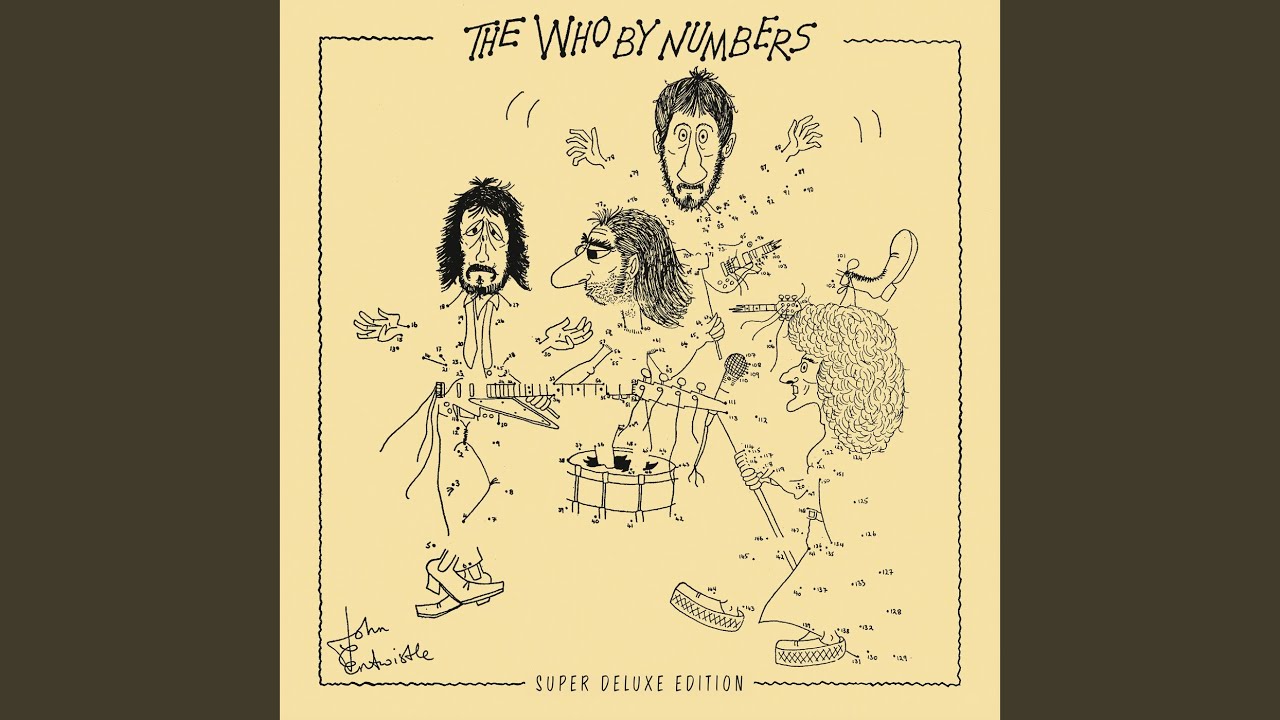
For Townshend, the album is an unusually intimate document of the Who. Released in 1975, it followed Quadrophenia and preceded Who Are You, but its songs were considerably more inward-looking than the band’s grandest rock statements.
“The Who by Numbers is a tricky album to talk about,” Townshend says in an official statement accompanying the reissue. “It’s the only one where I allowed songs that were so personal to be used by the Who.”
The Who by Numbers is a tricky album to talk about. It’s the only one where I allowed songs that were so personal to be used by the Who.”
— Pete Townshend
Roger Daltrey sees that vulnerability as one of the album’s greatest strengths.
“In some ways, The Who by Numbers is my favorite [Who] album,” he says. “Songs like ‘Imagine a Man,’ ‘How Many Friends’ and ‘However Much I Booze’ expose our vulnerabilities, and the album is wonderful for that.”
The album had been recorded at Shepperton Studios’ soundstage in Surrey, England, using Ronnie Lane’s Mobile Studio. The same mobile recording setup had been used on Quadrophenia, while Shepperton had also hosted sessions connected with Rory Gallagher’s Irish Tour ’74 and Bad Company’s early albums.
But the reason The Who by Numbers tapes wound up in California was what happened next: the album was mixed at Sunset Sound, and the original two-inch multitrack reels remained at the Hollywood studio.
There they stayed, apparently forgotten.
Kehew was uniquely qualified to recognize what he had found. Alongside Kevin Ryan, he co-authored Recording the Beatles, an exhaustive examination of the equipment, techniques and recording practices used at Abbey Road Studios. He had also helped locate previously lost recordings by artists including Jimi Hendrix and David Bowie.

And unlike many archive specialists, he had a personal history with the Who. Kehew had worked as a touring musician and keyboard technician with the band, giving him both the technical knowledge to understand the tapes and the familiarity to recognize their significance.
The timing was particularly fortuitous. Kehew had recently joined forces with fellow industry veteran Danny White to establish Master Tape Rescue, an effort devoted to locating and preserving recordings that might otherwise disappear.
For Kehew, the Who by Numbers tapes became the kind of discovery that makes archival work worthwhile. What began as a routine examination at Sunset Sound had uncovered not only an album everyone thought was lost, but a far richer record of how the Who made it — from Townshend’s demos to performances that never appeared on the original LP.
In related news, Townshend and Daltrey have each confirmed they have reconciled with drummer Zak Starkey and are rehearsing again. The Who wrapped up their farewell tour last October but have remained open to future performances.

