
Even after six decades of Beatlemania, the Beatles are still capable of springing genuine surprises.
The forthcoming Rubber Soul Special Edition, which comes out October 2, will include a previously unheard John Lennon song. A home demo of “Little Girl” was discovered on a tape reel from Lennon’s archive, and so little was known about it that there hadn’t even been whispers of its existence.
Rolling Stone has had a sneak preview of the track and describes it as “a fragile, gorgeous, bittersweet little tune.” It features nothing but Lennon’s voice and acoustic guitar. The song appears to be a tender love song, putting it a world away from another Lennon composition written during the Rubber Soul sessions that contains the phrase “Little Girl” — the dark and disturbing “Run for Your Life.”
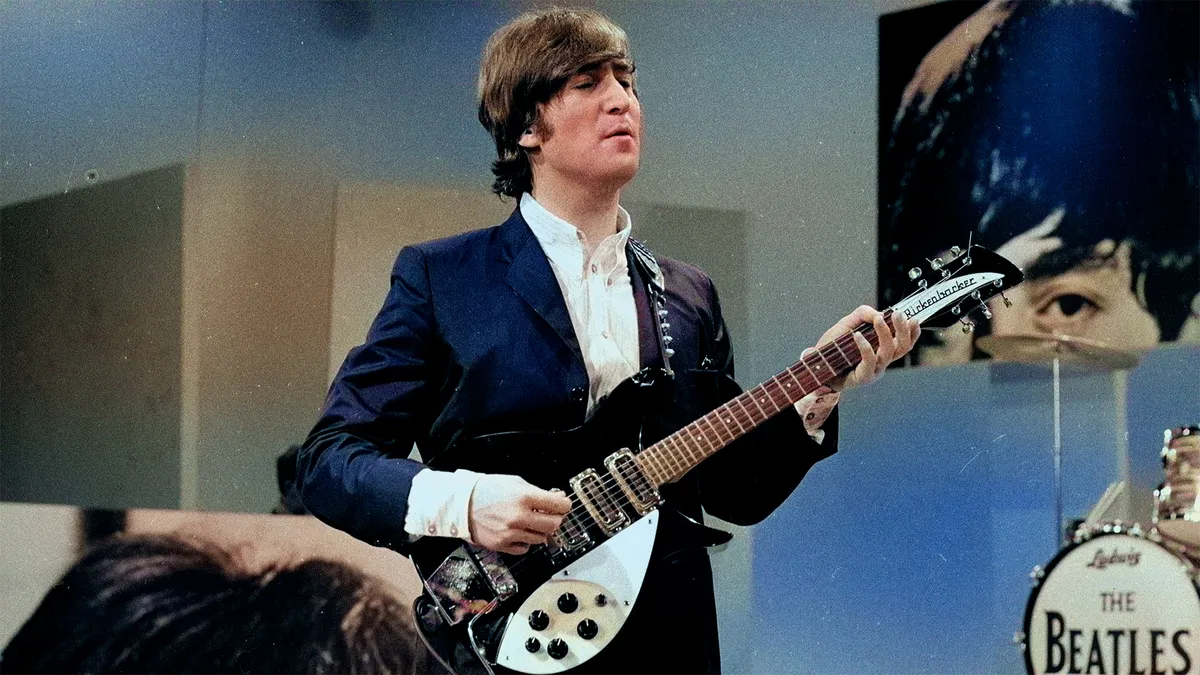
The project’s producer, Giles Martin, says the song’s sudden emergence is “surprising.”
“It came from the Lennon Estate — I think it was Sean,” he tells Rolling Stone. “It was one of those things where they say, ‘Oh, and then there’s this.’
“Like with all that stuff, I wasn’t sure whether people knew about it or not, or whether it was on YouTube,” he adds. “Quite often I’ll find something and go, ‘This is amazing.’ Then someone goes, ‘Yeah, it’s on YouTube. Everybody knows about that.’ I’m always the last person to know.”
In this instance, it really is a diamond in the rough. Discovered on a Lennon tape reel, Martin ultimately spliced together two sections to complete the 2:17 recording.
Martin says discoveries like this satisfy fans’ enduring appetite for unheard Beatles music.
“Apart from ‘It’s another song that would have made the album,’ there’s an insatiable desire for something more,” he says. “But I think it’s good to see all of the pencil drawings before you see the picture.”
There’s an insatiable desire for something more.”
— Giles Martin
The exact origins of the song are still unknown, but Martin and his team have deduced that it can be no older than the summer of 1965, given that it includes a tweaked Paul McCartney hook later heard on the Help! track “I’ve Just Seen a Face.”
Yet the song’s emergence from obscurity shouldn’t be wholly surprising, given the mad-dash nature of Rubber Soul’s creation. Much of the album was written in London following the band’s U.S. tour in August 1965, with their marijuana-fueled encounters with Bob Dylan still fresh in their minds.
Their manager, Brian Epstein, and producer, George Martin, had agreed that another album in time for Christmas was good for business, despite Help! having been released only weeks earlier. The band scrambled to write new material, with many songs arriving at Abbey Road unfinished. Given those frantic circumstances, the idea that one composition slipped through the cracks — despite Beatlemania and the exhaustive documentation of the group’s career — doesn’t seem quite so far-fetched.
Some songs have already been rescued from those sessions, with the bluesy instrumental “12-Bar Original” eventually finding its way onto Anthology 2.

Rolling Stone reports that many of the demo’s lyrics are placeholders; there’s a lot of “I love you” and “la la la,” as though Lennon is feeling his way through the song in real time. Speculation about the inspiration for the mysterious little girl ranges from a postcard sent by a Japanese fan to a nod to Brian Wilson’s “The Little Girl I Once Knew.”
The unanswered questions only add to the track’s mystique, reinforcing the remarkable fact that, more than half a century after Beatlemania and the Beatles’ breakup, the band’s story can still produce genuine surprises.
“Little Girl” isn’t the first Lennon demo to surface decades after it was recorded, and, judging by this latest discovery, it may not be the last.

