

As a member of the Beach Boys, Carl Wilson witnessed firsthand how the musical genius of his brother Brian shaped the band’s hit albums and singles throughout the 1960s.
But when Brian’s involvement decreased in the 1970s due to his mental health decline and substance abuse, Carl stepped up. Beginning with 1971’s Surf’s Up, he began contributing songs of his own over the following decade, including that album’s standout track “Long Promised Road.”
One of his preferred songwriting partners was a guitarist who could only dream of California’s sun and sand: Canadian musician Randy Bachman, best known for his work with the Guess Who and Bachman-Turner Overdrive.

Although Carl worked with other songwriters, he called Bachman his favorite “because he rocked, and I love to rock,” he explained in the 1993 television documentary The Beach Boys Today.
We just hung out together all the time on the road when I was with the Guess Who. I loved the guy like a brother. He was just a really sweet, wonderful guy.”
— Randy Bachman
The two guitarists first crossed paths in the mid-1960s, eventually forming a close friendship that lasted until Wilson’s death in 1998.
“Growing up in Winnipeg, Manitoba, where we had winter six months of the year, I was intrigued by the Beach Boys,” Bachman tells Guitar Player. “Hearing that these guys stood on a wooden board on a wave of the water, we didn’t know what surfing was in Canada! I mean, for us, it’s a toboggan or a sled, and you’re sliding down a hill on ice and snow.”
Bachman says he and the late Beach Boy shared much in common.
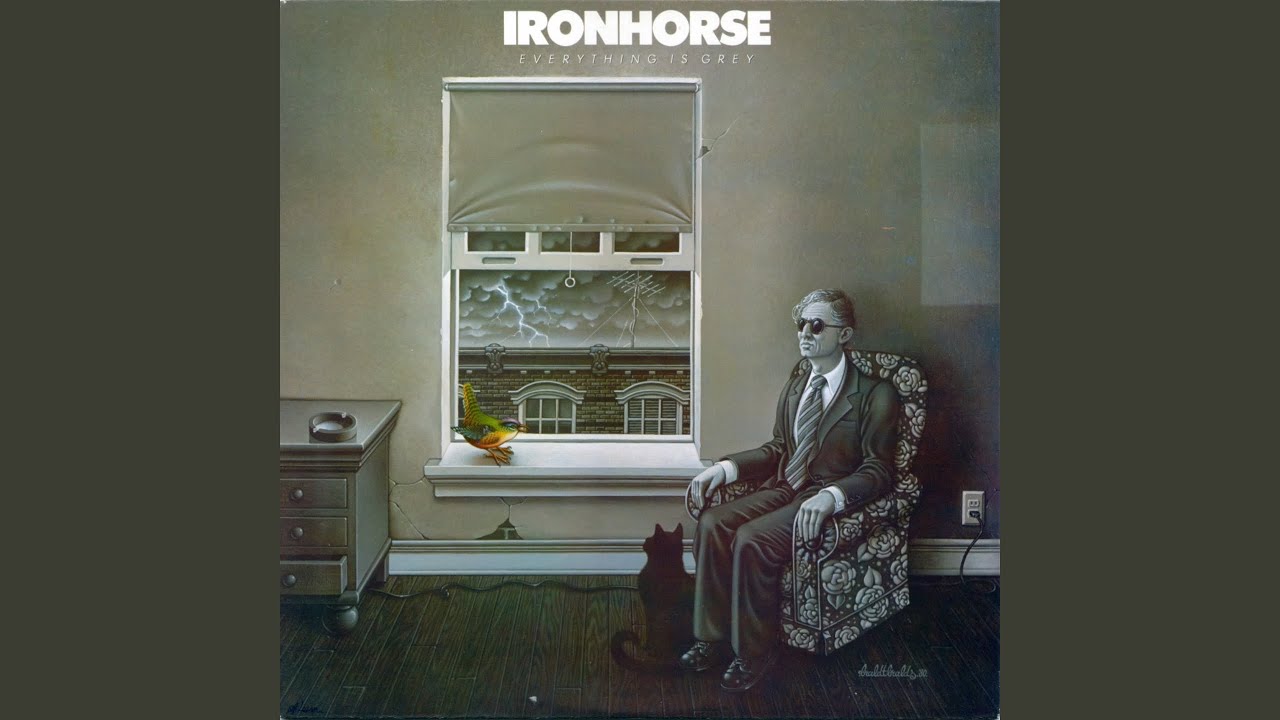
“We looked the same, and we were kind of what you would call husky guys,” he says. “We both had the same brown hair, the beard and everything, and we just hung out together all the time on the road when I was with the Guess Who and then years later when I had a band called Ironhorse, and we opened for the Beach Boys many times. I loved the guy like a brother. He was just a really sweet, wonderful guy.”
The two men began working together after Wilson heard Ironhorse on the radio and invited them to tour with the Beach Boys in 1979. Their three shows together led to more performances.
Bachman recalls, “In the middle of the tour, he said, ‘We have three days off. Do you want to come to Caribou Ranch with me and write some songs for the next Beach Boys album?’ He said that Brian had gone into rehab and they just kind of needed some impetus to get them going.
“So I went to Caribou Ranch with him, and we wrote some songs, including ‘Keepin’ the Summer Alive,’ which became the title of their next album.”
The two also wrote the Ironhorse song “What’s Your Hurry, Darlin’?” Bachman says the song’s arrangement paid tribute to the Beach Boys’ 1964 hit “Don’t Worry Baby,” which Carl sang.
During their songwriting session, Wilson had one request. “The Beach Boys would always say a prayer before they went on stage together, and when Carl came to my studio to write some songs and record the demos, it was the same thing,” Bachman explains. “Carl asked, ‘Do you mind if we say a prayer?’ So we’d dim the lights, hold our hands together and ask that the spirit be with us so we could create good music.”
Bachman says that despite the Beach Boys’ sunny pop style, Carl Wilson was a guitar rocker at heart. Songs like “Student Demonstration Time,” from their 1971 album Surf’s Up, showcase Wilson’s raucous guitar work. But due to Brian Wilson’s overpowering musical vision, Carl’s talent wasn’t allowed full expression.
“Carl was a rocker, but when you have a genius brother like Brian, you tend to be in their shadow,” Bachman explains. “You realize he is a genius, so you just let him go and do it. So Carl didn’t start to shine until Brian stayed home more.”
Wilson was so eager to have the band rock out more that he made an offer to Bachman to join the group for the recording sessions for Keepin’ the Summer Alive.
“He asked me if I would join the band, because they were having trouble with personnel,” Bachman reveals. “They couldn’t get the vibe that they wanted for the songs. He said, ‘We can’t play heavy enough, so could you get us to play like BTO?’ and asked if I could fly to Los Angeles and join them.
“But I was going through a divorce. I told Carl I couldn’t come, as I had got custody of my six kids, and if I left now, my ex-wife would go back to the court. And I was not going to lose my kids. So I missed out.”
Bachman believes that, as a guitarist, Wilson was totally underrated.
“I loved his guitar playing; it was very simple,” he affirms. “As you know, on most of the early records, it was Glen Campbell who played most of the lead guitar on those early songs, but Carl did play lead onstage. He wasn’t an Eddie Van Halen, but he was a really good guitar player, and he played almost like George Harrison, where you’d play the right part of the song.”
Bachman says Wilson also surrounded himself with “beautiful” instruments, including several electric guitars.
“His favorite guitar was a beautiful blonde, double-cut Gibson 335 with a gold Bigsby on it,” he says. “It was just gorgeous.
“And he had a Gibson ES-335 12-string, which I’d never seen before, and he actually left that at my studio when he came to record. He just had to fly home right away, so he left the guitar there. He said, ‘I’ll just leave it here for when I come back,’ but he never came back.”
When Wilson died, Bachman sent the guitar to his family.
“I sent it to his office for his children,” he says, “because I thought it wasn’t right if I kept the guitar.”
It was a final gesture of respect from one musical brother to another.

