
Randy Bachman’s relationship with Bob Seger goes back to the early days of both men’s careers, thanks to the latter’s Detroit becoming a hotbed for the former’s Guess Who via CKLW-AM radio just across the river in Windsor, Ontario.
And during the mid ’70s, the friendship nearly became a studio relationship.
According to Bachman, in 1975 Seger approached him about producing his next album, which would be the breakthrough Night Moves the following year. Bachman says Seger and his Silver Bullet Band “opened about 250 dates” for Bachman-Turner Overdrive at its commercial peak, with the Canadian quartet’s Not Fragile album at number one on both sides of the border and riding a batch of hits that included “Takin’ Care of Business,” “Let It Ride,” “You Ain’t Seen Nothing Yet” and “Roll on Down the Highway.”
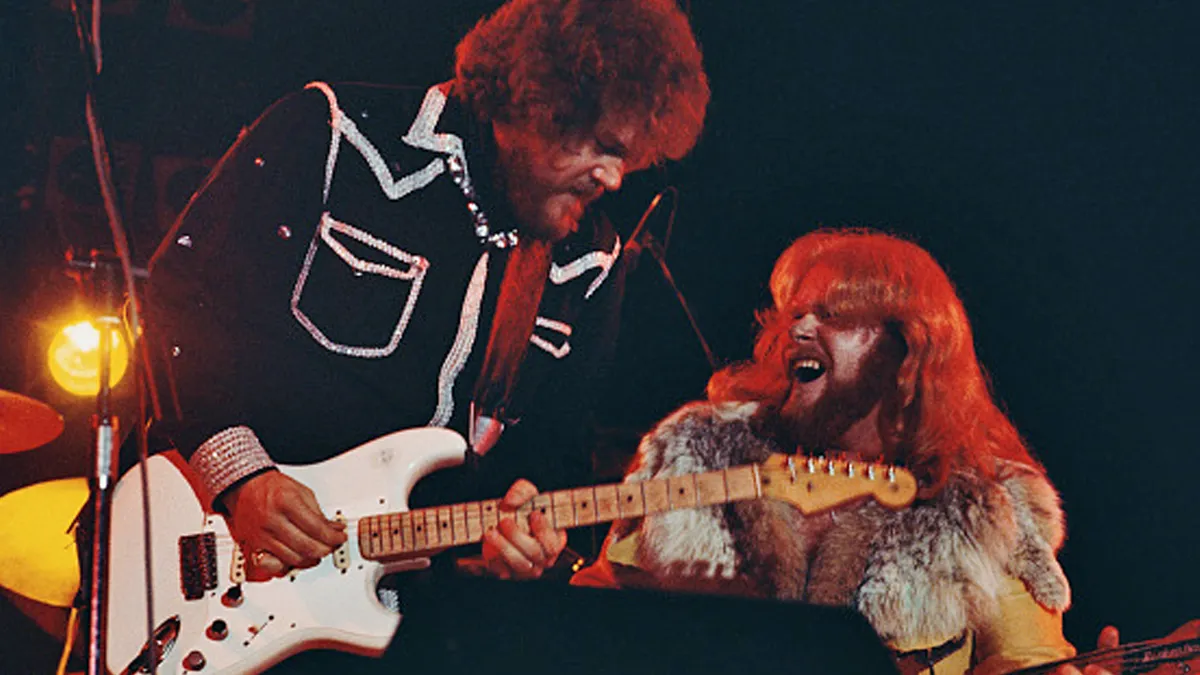
“When we hit number one, my manager, Bruce Allen, said to me, ‘Who do you want to open for you? You can pick anybody you want’,” Bachman recalls. “I said, ‘Bob Seger’ and he said, ‘Who?’
“I said, ‘He’s got these great songs: ‘Ramblin’ Gamblin’ Man’ and ‘2 + 2 = ?,’ and he said, ‘Okay, we’ll try to find him’ and I said, ‘He’s somewhere in Michigan.’
“So [Allen] called around and finally found him and got him to be our opening act. We’d go on the road together and we were kind of good buddies.”
At the time, Seger had recently returned to his original label, Capitol Records, after a three-album stint on Reprise. His 1975 set Beautiful Loser was his most successful to date, and he’d record the landmark Live Bullet concert set in its wake. Well aware of BTO’s success, Seger approached Bachman about being part of his next move.
“He said, ‘Would you help me write and produce me new album. I’m not sure what to do’,” Bachman tells us. “His record company was like, ‘Will you do a new album? We really like what you’re doing’ and blah, blah, blah. I think he felt like a lot was riding on whatever he’d do next.”

Bachman was tempted but unavailable. “I said, ‘I’d love to, but I’m still producing BTO. I’ve got five kids at home who don’t know who I am and I’m producing a Canadian band called Trooper, for fun.
“I don’t have time to do another band’,” Bachman remembers, “But I said, ‘I’ll give you my old producer, Jack Richardson, who produced the Guess Who.’
“So I connected Jack Richardson with Bob Seger, and — click, click — he has a big hit and makes a fortune.”
Richardson produced only one song, but it was the right one — the title track for Night Moves, which came out the following year. The nostalgic ode — about Seger’s fling with a woman in Ann Arbor, Michigan, while her boyfriend was in military service — was recorded at the producer’s Nimbus Nine studio in Toronto. It was one of several the two worked on together, including a pair of other Seger originals and a cover of the Supremes’ Motown hit “My World Is Empty Without You.”
It was the last of the four they recorded, and only two members of Seger’s Silver Bullet Band, bass guitarist Chris Campbell and drummer Charlie Allen Martin, were still in the studio. Richardson brought in local musicians Joe Miquelon on electric guitar and Doug Riley on organ, along with four female backup singers. Poco’s Paul Cotton later overdubbed a guitar solo that was subsequently left off the track.

Seger’s manager, Ed “Punch” Andrews, did not like “Night Moves” and did not submit it to the label. Richardson did, however, and Capitol executives insisted it not only be included but also be the title track and first single. Good move, that: “Night Moves” made its way to number four on the Billboard Hot 100 — Seger’s first Top 10 single — and was certified double Platinum, opening the door to another 18 Top 20 singles. The Night Moves album, which celebrates its 50th anniversary in October, hit number eight on the Billboard 200 and has been certified six-times Platinum.
Seger, who was inducted into the Rock & Roll Hall of Fame in 2004 and the Songwriters Hall of Fame in 2012, has been out of sight since ending his Roll Me Away: The Final Tour on November 1, 2019, in Philadelphia. While no 50th anniversary plans have been revealed for Night Moves yet, he recently announced a 20th anniversary reissue of his Face the Promise album, featuring four bonus tracks, three of which are previously unheard.

