


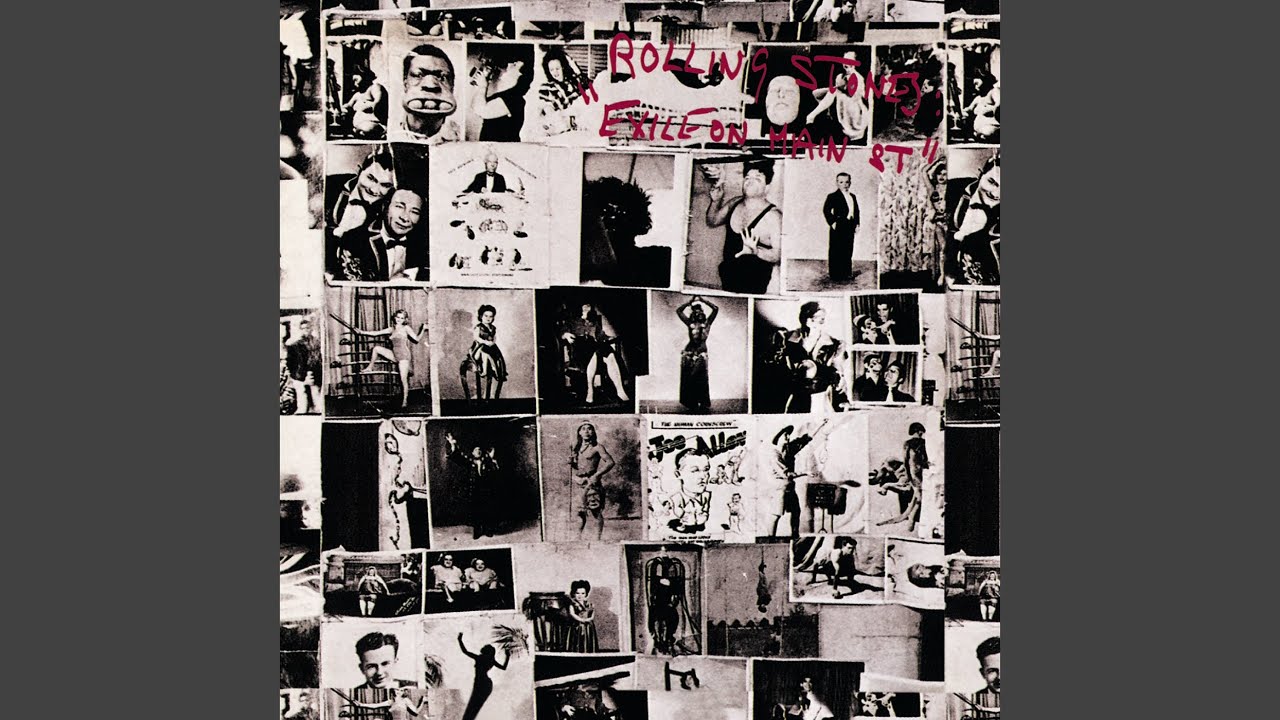
When the Rolling Stones decamped to the south of France in 1971 to record what would become Exile on Main St., they created one of rock’s most celebrated albums. But while the record has since attained near-mythic status, Mick Jagger has never been quite as enamored with it as the critics and fans who helped turn it into a classic.
By June 10, 1972, Exile on Main St. had reached No. 1 in the U.K. and topped charts around the world. Over the decades, it came to be regarded as one of the Stones’ defining statements. Yet Jagger has long viewed the album through a different lens—one colored by memories of disorder, unfinished work and a recording process he felt largely fell on his shoulders.
“Exile is not one of my favorite albums, although I think the record does have a particular feeling,” Jagger said in 2003 (via Far Out).

“I’m not too sure how great the songs are,” he continued. “It has some of the worst mixes I’ve ever heard. I’d love to remix the record, not just because of the vocals, but because generally I think it sounds lousy. At the time, [producer] Jimmy Miller was not functioning properly. I had to finish the whole record myself, because otherwise there were just these drunks and junkies.
“Of course I’m ultimately responsible for it, but it’s really not good, and there’s no concerted effort or intention.”
Those are striking comments about an album now widely considered a masterpiece. Yet they also reflect the reality of the sessions that produced it.
![The Rolling Stones - Tumbling Dice [Official Lyric Video] - YouTube](https://img.youtube.com/vi/EMoi_m2G6XU/maxresdefault.jpg)
The Stones had begun work on some of the material at London’s Olympic Studios during the Sticky Fingers era before relocating, as tax exiles, to Villa Nellcôte on the French Riviera. There, they converted the villa’s basement into a makeshift recording space and worked in conditions that were anything but conventional.
For Jagger, who was preparing to become a father and frequently traveled to Paris to be with his wife, Bianca, the lack of structure proved frustrating. The villa became a revolving door of musicians, friends, dealers and celebrity visitors.
“There were a lot of people who came to visit that I don’t remember,” guitarist Mick Taylor later told Classic Rock. “I don’t remember John Lennon and Yoko coming, but apparently they did.”

Keith Richards, meanwhile, was battling a serious heroin addiction. According to the band’s lore, he was often absent from sessions taking place in Nellcôte’s basement studio. The chaos that Jagger viewed as an obstacle was, for Richards, simply part of the environment.
“We didn’t start off intending to make a double album,” Richards recalled in According to the Rolling Stones. “We just went down to the south of France to make an album, and by the time we’d finished, we said, ‘We want to put it all out.’”
“The Stones had reached a point where we no longer had to do what we were told to do,” he added. “I was no longer interested in hitting Number One in the charts every time.”

Richards would later tell Guitar World that Exile represented a conscious move away from the pursuit of singles. “It was made for what it was,” he said. “It was an album.”
That difference in outlook lies at the heart of the band’s conflicting memories of the record. Richards remembers freedom. Jagger remembers trying to impose order on a situation that often seemed determined to resist it.
“I think Keith was pretty out of it for some of that period, which shouldn’t have helped, but maybe it did,” Charlie Watts once observed. “Maybe that was where the creative energies came from.”
The sessions were plagued by practical problems as well. The summer heat played havoc with instrument tuning, recording schedules were inconsistent and songs often took far longer to complete than anyone anticipated. When Richards failed to pay the dealers providing him with heroin, they sent their henchmen to the house to steal several of the electric guitars used on the sessions, including Taylor’s 1959 Gibson Les Paul, which is said to be at the heart of a dispute with the New York City Met.
What emerged from the sessions was less a carefully executed plan than a collection of performances assembled amid confusion and constant interruption.
Richards embraced that unpredictability. Jagger struggled with it.
“Mick needs to know what he’s going to do tomorrow,” Richards said in the 2010 documentary Stones in Exile. “Me, I’m just happy to wake up and see who’s hanging around. Mick’s rock, I’m roll.”
That tension between discipline and spontaneity has always fueled the Stones. On Exile on Main St., it was amplified by circumstance, producing an album that still divides its creators even as it unites listeners.
For all of Jagger’s reservations, Richards has remained unequivocal in his assessment.
“For a year or two, it was considered a bomb,” he said in 2002. “This was an era where the music industry was full of these pristine sounds. We were going the other way. Yes, it is one of the [Stones’] best.”
More than 50 years later, Exile on Main St. remains a testament to the strange chemistry that powered the Rolling Stones at their peak: one songwriter trying to impose order, the other embracing disorder, and a classic album emerging somewhere between the two.

