
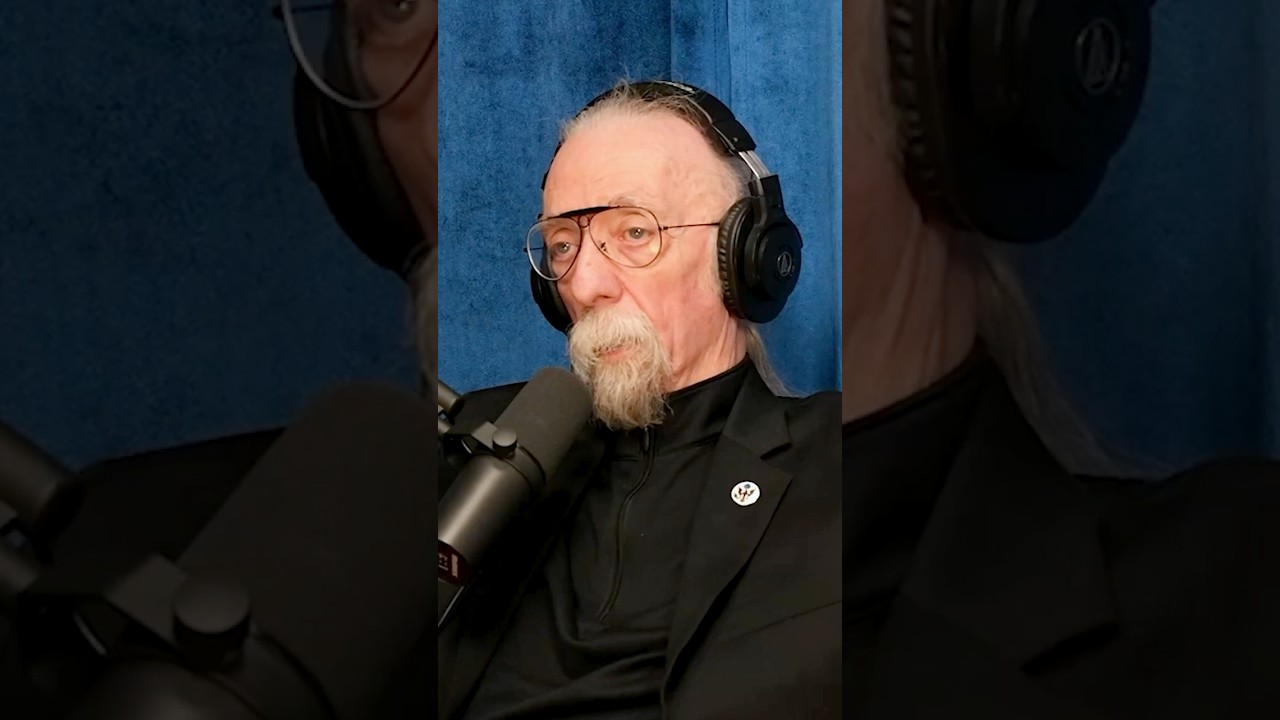
Jeff “Skunk” Baxter has played on hundreds of recordings as a member of Steely Dan and the Doobie Brothers, as well as in his long career as a session musician. He has two essential pieces of advice for guitarists, which he shared during a conversation about performance with co-hosts Jason Alexander and Peter Tilden.
The men were appearing on an episode of the podcast Really? no, Really?. Titled “Guitars & Guided Missiles: Jeff ‘Skunk’ Baxter’s Extraordinary Career,” the episode offers an examination of both Baxter’s history and his unique approach to the guitar and problem solving.
“I only give two lessons,” Baxter tells Alexander. “One is use a metronome. ’Cause if you can't groove, you're not gonna get any work.”

But it’s lesson number two that takes the conversation in a different direction. Baxter — who has riffed on the hidden charms of modern electric guitars — introduces the concept by pointing to Canadian jazz pianist Oscar Peterson.
“If you ever watch Oscar Peterson play, he's playing, but you can hear him going [scats]. Basically, he's singing. And I always tell anybody who wants to learn to play the guitar to sit down and sing while you play, because eventually you'll be able to connect singing the melodies in your head to your fingers.
“And that's how you get what the psychologists call 'flow,' where you remove the conscious piece. That's what most people do when they're improvising — they’re actually translating the voice in their heads to their fingers.”
Alexander agrees, offering a powerful illustration of Baxter’s point from his own viewing history.
“I remember watching a great documentary years ago about Isaac Stern, the violinist, in China. There was a section where he was teaching protégés — I mean, really gifted young violinists — and he was doing a master class.
“And this young woman got up and she played, you know, 16 bars of a piece, and it sounded great. And he went, ‘Yeah, put the instrument down. Sing it. Sing what you just played.’ And she sang it. And he said, ‘Now, pick up the instrument and sing it as you play it.’ And it transformed her playing. And I thought that was remarkable.”
Baxter explains that singing while playing is transformational because it forces a musician to shape their phrasing, adding nuance, interest, and expression to the performance.
“The melodies usually are pretty close, but the phrasing is, I would say, 60 percent of why people enjoy what you play,” Baxter says. “It’s how you play it, not necessarily what you're playing.”
