
The Beatles drew inspiration from all over the musical map — Motown, acoustic folk, rockabilly and beyond. But one of the darkest lines ever sung by the band can be traced directly to a 1950s rock and roll record by Elvis Presley.
John Lennon turned the lyric into “Run for Your Life,” the closing track on Rubber Soul — a song he would later call his least favorite Beatles recording.
The track is about to return to the spotlight as the Beatles prepare to release a Super Deluxe edition of Rubber Soul on October 2, expanding the landmark 1965 album with new stereo mixes by Giles Martin and Sam Okell, unreleased session recordings and demos, and the original mono version.

The lyric appears in Presley’s 1955 Sun Records single “Baby, Let’s Play House,” written by Arthur Gunter. Early in the song, Presley delivers a line that’s as blunt as it is unsettling: “I’d rather see you dead, little girl, than to be with another man.”
The phrase stuck with Lennon. Nearly a decade later, he borrowed it almost verbatim for the opening line of “Run for Your Life” before building the rest of the song around the same jealous premise, warning its subject that if he ever caught her with another man, “that’s the end.”
Years later, Lennon admitted the song wasn’t something he thought much about at the time.
“I never liked ‘Run for Your Life’ because it was a song I just knocked off,” he told Rolling Stone in 1970. “It was inspired from Elvis.”
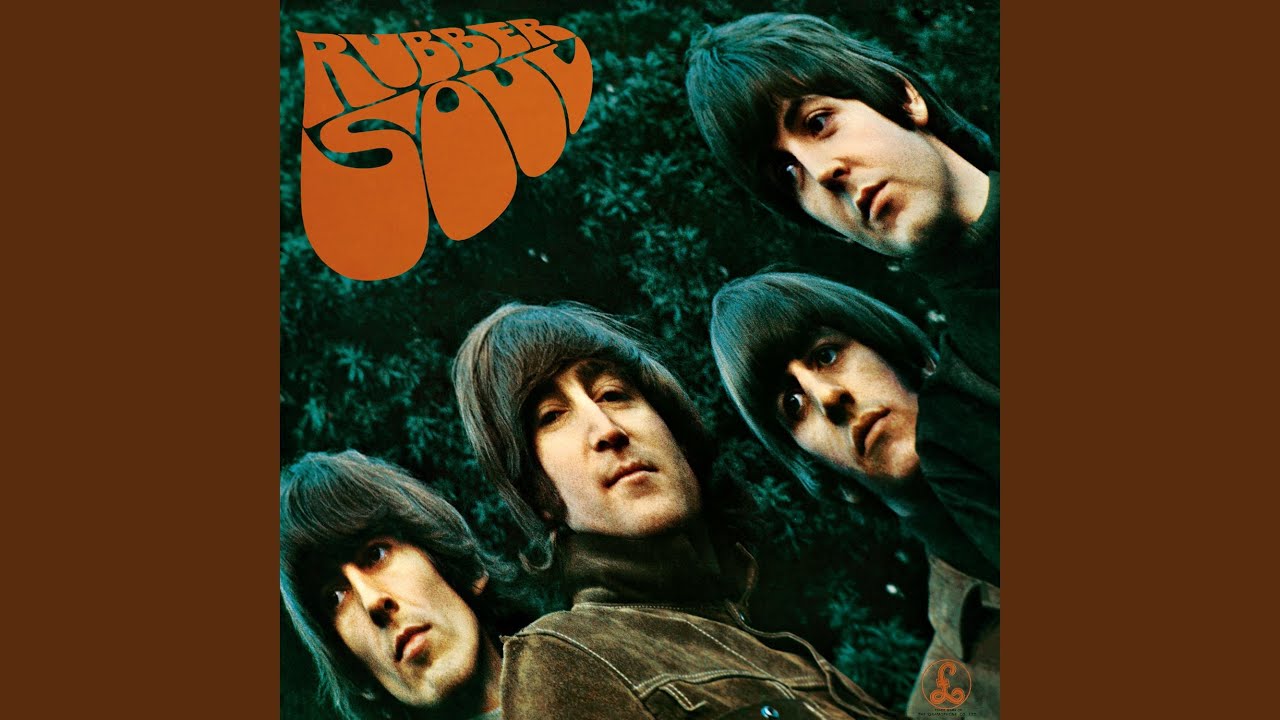
The track ultimately became the closer on Rubber Soul, the Beatles’ sixth studio album and one often regarded as the point where the band fully embraced the LP as an artistic statement rather than simply a collection of songs.
It was also the first Beatles album to hint at the psychedelic era through increasingly adventurous studio experimentation. George Harrison famously introduced the sitar to the band’s sound on “Norwegian Wood (This Bird Has Flown),” while Paul McCartney used a fuzz bass tone on Harrison’s “Think for Yourself,” reflecting the group's growing willingness to expand its sonic palette.
“Run for Your Life,” however, had simpler origins than many of the album’s other songs. Lennon later described it as a quick composition built around the Presley lyric that had caught his ear years earlier.
“I wrote it around that,” he said. “But I didn’t think it was that important.”

In hindsight, the song also reflected something about Lennon’s state of mind at the time. As McCartney later noted in his memoir Many Years From Now, Lennon’s lyrics often revealed a possessiveness that contrasted with McCartney’s own outlook on relationships.
It was sort of a throwaway song of mine that I never thought much of. But it was always a favorite of George’s.”
— John Lennon
“John was always on the run, running for his life,” McCartney wrote. “He was married; whereas none of my songs would have ‘catch you with another man.’ … I wasn’t as worried about that as John was. A bit of a macho song.”
Even if Lennon dismissed the track as a throwaway, there was little chance of replacing it. With the holiday season approaching, the Beatles were racing to finish Rubber Soul in time for its December 1965 release.

The album’s final recording session — which began at 4 p.m. on November 11 and stretched into the early hours of the next morning — saw the band record McCartney’s “You Won’t See Me” and Lennon’s “Girl,” while also adding overdubs to “Wait.” With the deadline looming, there simply wasn’t time to write and record another song. “Run for Your Life” remained in place as the album’s closing number.
And while Lennon would later call it his “least favorite Beatles song” and say he “always hated” it, at least one of his bandmates felt differently.
“It was sort of a throwaway song of mine that I never thought much of,” Lennon later said. “But it was always a favorite of George’s.”
