

Steve Vai was living the rock-star dream in the 1980s. He was playing to enormous crowds, performing on stages the size of football fields and enjoying the kind of freedom that came with being one of rock’s hottest guitar players. But behind the success, he was struggling with a debilitating depression.
The guitarist says he was in his early 20s when his mental health took a serious turn. A book that arrived unexpectedly in his mailbox would help change his outlook, and he believes its message could benefit other musicians and creative people dealing with similar struggles.
Vai’s career had already taken him from a trial-by-fire stint in Frank Zappa’s band to going toe-to-toe with Eddie Van Halen as David Lee Roth’s gunslinger. He would later embark on a whirlwind stint in Whitesnake. By any measure, his professional life was extraordinary. His personal life, however, was proving considerably more difficult.

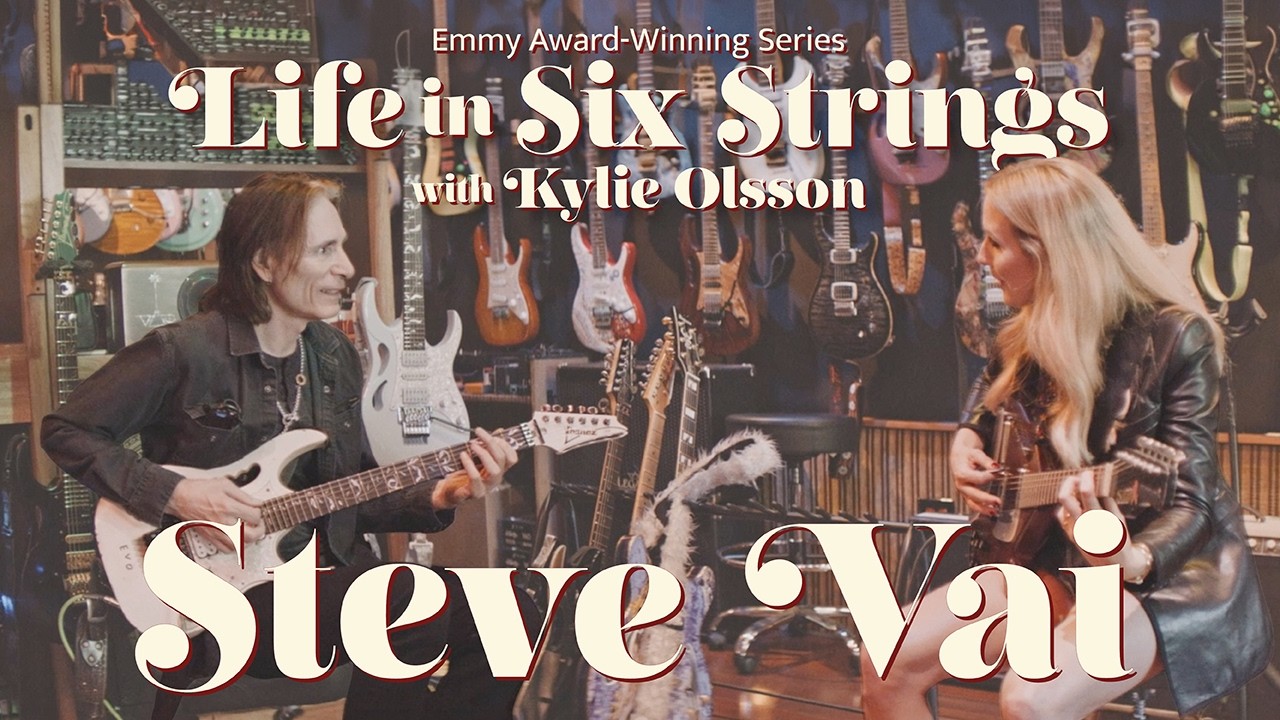
“I was going through a very rough psychological time in my early 20s,” Vai tells Kylie Olsson in a new episode of her YouTube series, Life in Six Strings. “It got real bad.”
By his mid-20s, Vai says, he was in the grip of a serious depression. Despite his rising profile, there was little outward indication of what he was experiencing.
“By the time I was like 21 and a half, I was in a full-blown depression,” he says. “I needed something, you know? A book appeared in my mailbox, and I don't know how it got there. It was called The Magic in Your Mind by U.S. Anderson, and that's the book I'd recommend [to anyone struggling with depression].
“It was the first time I read anything that started to show you the difference between the ego, the power of the mind, and your own power.”
First published in 1961, The Magic in Your Mind explores the power of thought and the subconscious, arguing that people can overcome self-imposed limitations by changing how they think about themselves and the world around them. For Vai, its message offered a new way to understand his depression and the stories he was telling himself. He says its impact was lasting, with spirituality continuing to inform his outlook and everyday life.
Asked why musicians and other creative people might be particularly susceptible to depression, Vai offers his own interpretation.

“Depression is a result of believing thoughts in your head that are illusions,” he says. “I recognized the truth of that; it's the stories you tell yourself in your head that are full of shit.
“People who are artistic and creative have a strong impulse to create,” he continues. “They’re very passionate that when they're focused and when they create, they're presenting not their work, but a part of themselves. But the bottom line is everybody is creative. You are catering to your unique creative impulses because something in you decided that you wanted to do this.

“This whole series that you’re doing,” he says, turning to Olsson, “You had an idea, you pulled it together, you found the cooperative components when you needed a camera team. So, while you're doing that, you're not thinking about the past or future. You're in the moment that the idea came to you to do this. You were focused.”
For Vai, that ability to become absorbed in the creative process is central to his thinking. Rather than getting caught up in the internal narratives that can fuel depression, he believes that being fully present allows people to connect with the creative impulses that drive them.
It's a philosophy he thinks could be particularly valuable to musicians. A British survey of professional musicians found that 68% reported experiencing depression, compared with 22.5% of the general public.
Vai's perspective isn't a substitute for professional mental health care, but his experience underscores the importance of taking mental well-being seriously, particularly in a profession where creative fulfillment and personal vulnerability can be closely intertwined.

