

On July 6, 1957, Paul McCartney met John Lennon for the first time at a church fête in Liverpool. Lennon was 16, McCartney 15, and although the younger musician had more skill on guitar, it was one particular song that helped convince Lennon to invite him into his skiffle group, the Quarrymen.
As McCartney reveals in a 1999 interview, it was all due to one song.
Their fateful meeting took place at St. Peter’s Church Hall fête in the Liverpool suburb of Woolton, where Lennon lived with his Aunt Mimi. McCartney attended the event with his mate Ivan Vaughan, a friend of Lennon’s.
“He used to be in one of the little skiffle groups that John was in,” McCartney told British TV host Michael Parkinson in a 1999 interview for his BBC talk show, Parkinson. “So he said you should come along to this thing. You know this group’s playing, and my mate John’s in it.”
The Quarrymen were a skiffle group formed by Lennon and his school friends from Quarry Bank High School. McCartney and Vaughan arrived in time to catch the band’s afternoon set and see Lennon sing “Come Go With Me,” by the Del Vikings. Lennon didn’t know the words and improvised them, which McCartney found both amusing and impressive.
“John just looked like he had something,” he told Parkinson. “What happened was, they did their first set and then they had a break, and then they were due to do the evening set. So the break was an opportunity for the band to get drunk, really.”

By the time Vaughan took McCartney around to meet the band, Lennon had had a few beers, he recalls. When Vaughan explained that McCartney played guitar, Lennon asked him to play.
“One of them lent me his guitar and I had to turn it right, because I’m left-handed,” he said. “They wouldn’t let me change the strings. But because I had a mate who had a right-handed guitar, I’d learned to play upside down. So that was a little bit impressive.
“But I also knew the words to this song that they all loved,” he continued. “And they didn’t know the words. That was enough to get me in.”
The song was Eddie Cochran’s “Twenty Flight Rock.” Cochran performed the tune in the 1956 U.S. musical comedy The Girl Can’t Help It, which also featured standout performances by McCartney favorites Fats Domino, Little Richard and Gene Vincent (who would also prove to be a big influence on Jimmy Page). But it was Cochran’s “Twenty Flight Rock” that had captured the hearts of young guitarists with its insistent riff and Cochran’s twanging, heavily vibratoed voice.
Although Cochran’s “20 Flight Rock” had been released in the U.K. in April 1957 on London Records, backed with “Dark Lonely Street,” McCartney hadn’t been able to get hold of a copy. The single, issued on both 78 and 45 rpm formats, may have sold out locally. Instead, he learned the lyrics by repeatedly watching Cochran perform the song in The Girl Can’t Help It. The U.S. single wouldn’t follow until November 1957.
The film and the musicians it showcased made a huge impact on Liverpool teens, who were enthralled by the performances. Thanks in part to the film, Little Richard’s popularity in Liverpool surged, with his records reportedly outselling Elvis Presley’s there. The film also helped introduce American rock and roll performers to British audiences, paving the way for the growing popularity of the music in the U.K.
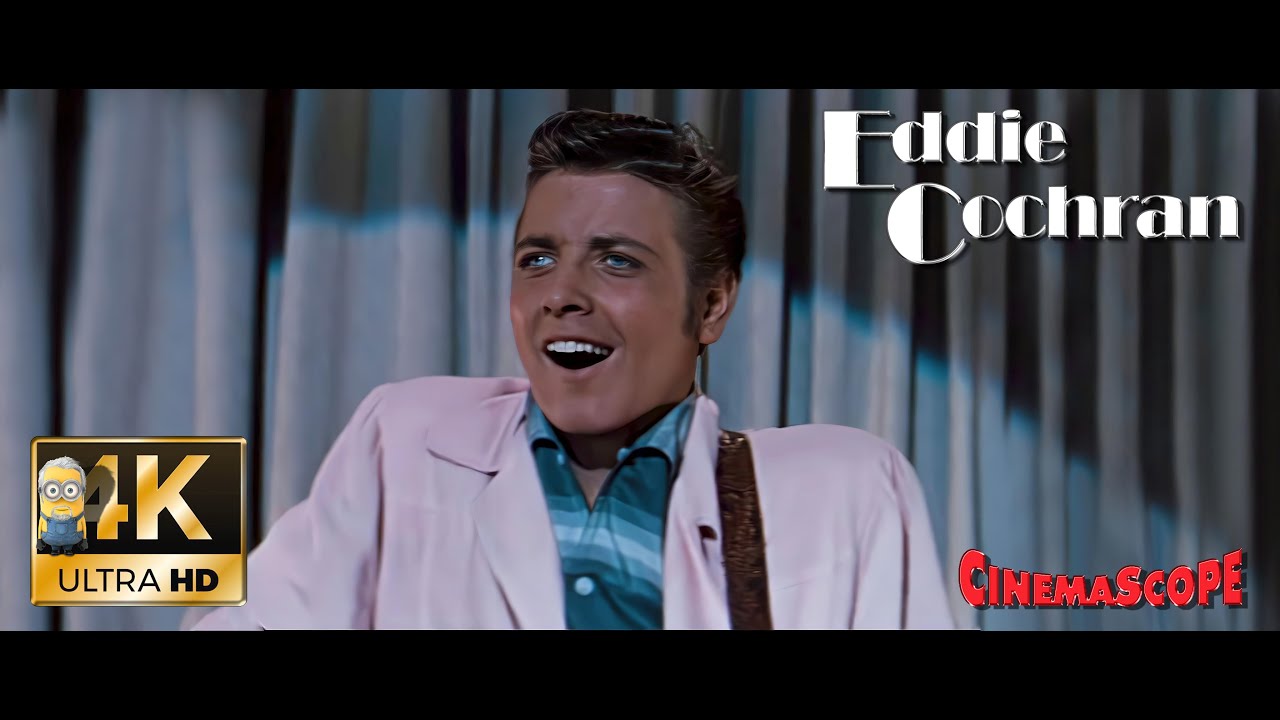
As for McCartney, upon seeing the movie he headed out to his local record store to order Cochran’s record, only to learn it wasn’t available. So how did he know the lyrics? He was a huge fan of The Girl Can’t Help It and had apparently seen it several times during its seven-week run at the Scala Cinema on Liverpool’s Lime Street.
“We idolized these people, and we always thought they were given crummy treatment — until The Girl Can’t Help It,” he said in the Beatles’ Anthology book. The film was so important to him that the Beatles took a break from recording “Birthday” for the White Album on September 18, 1968, to go to McCartney’s house to watch the film’s British TV premiere. They returned to the studio afterward to finish the song.
Cochran, in particular, was appealing to musically inclined teens. He was just 18 when The Girl Can’t Help It was released in December 1956 — not much older than Lennon or McCartney — and played a Gretsch 6120 hollowbody electric guitar. And, as McCartney explains to Parkinson’s audience, it was his “Twenty Flight Rock” that would bring him and Lennon together, setting the stage for the creation of the Beatles.
“So I’ll just do a little bit of it,” McCartney said to Parkinson’s audience. “Show you what got me in the Beatles.”

