
Ronnie Wood knew Jimi Hendrix as a friend and fellow musician, and now the Rolling Stones guitarist is paying tribute to his late friend with a collection of paintings and drawings being exhibited in Hendrix’s former London home.
Ronnie Wood: The Jimi Hendrix Portraits is being presented at Handel Hendrix House in London, where two previously unseen original portraits of Hendrix are displayed alongside prints of Wood’s earlier paintings inspired by photographs of the guitarist. The exhibition runs through April 11, 2027.
Wood’s connection to Hendrix went well beyond that of an artist depicting a rock icon. The pair met in the mid-’60s, became friends and briefly shared a flat in Holland Park. Wood also jammed with Hendrix while playing bass in the Jeff Beck Group — and Hendrix apparently had a particular appreciation for what Wood could do with the instrument.

That bass-playing chapter in Wood’s career might seem surprising to anyone who knows him primarily as the guitarist who joined the Rolling Stones in 1975, or as the guitarist of the Faces. But when Wood first joined the Jeff Beck Group after Beck left the Yardbirds, he was initially part of a two-guitar lineup.
Wood had been a fan of the Yardbirds before he ever worked with Beck.
“I used to see the Yardbirds a lot at the Crawdaddy Club,” he recalled in a video on his YouTube channel. “People were swinging from the rafters in there, sweat dripping from the ceiling; the atmosphere was incredible with the crescendos they used to do.”
One song in particular stuck with him: the Yardbirds’ fast-paced take on Muddy Waters’ “Mannish Boy.”
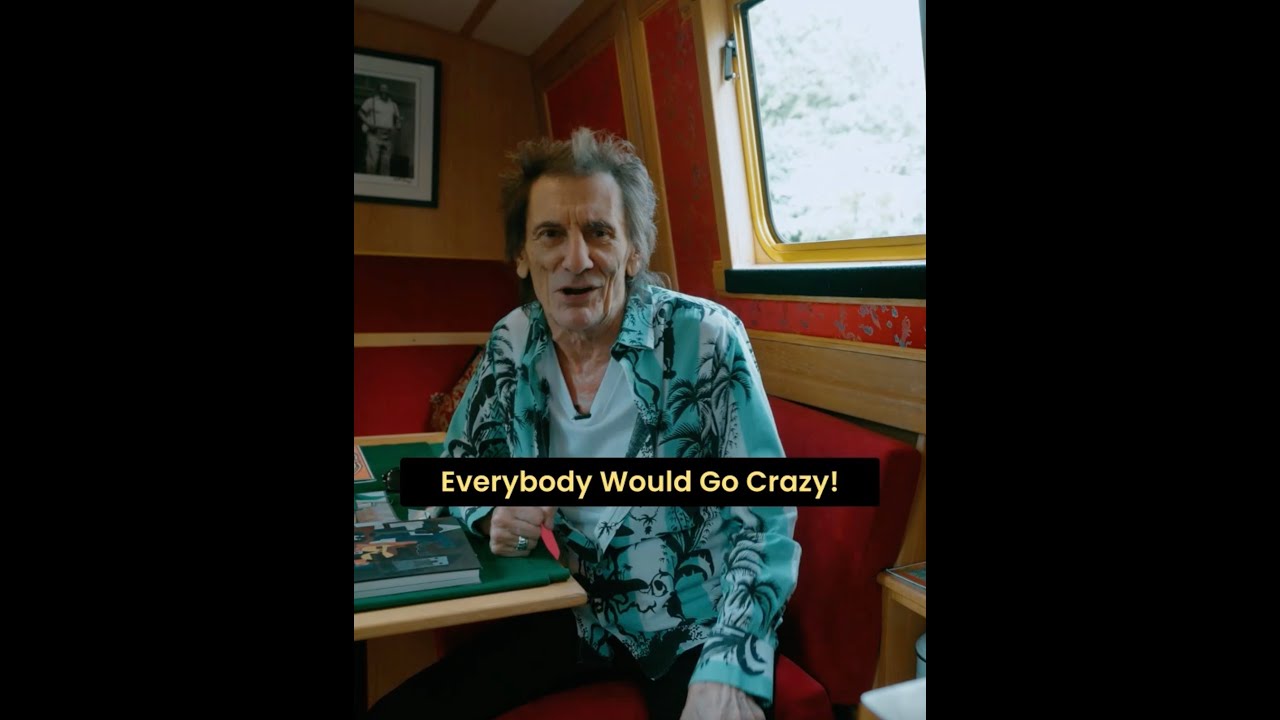
“Everybody would go crazy,” Wood said. “So I said to Jeff, ‘If you ever think about leaving the Yardbirds, we should get together.’ And sure enough, he did leave, and he did ring me up and say, ‘Let’s get together.’”

Wood initially played rhythm guitar alongside Beck, with Dave Ambrose on bass. But after a show at London’s 100 Club, a conversation involving another future rock legend helped change the lineup.
At the time, Jon Lord — who would go on to become the keyboardist of Deep Purple — was living with Wood. Lord had been a member of the Artwoods, the band led by Wood’s older brother Art.
“One day after playing the 100 Club, John Lord, who was living with me at the time — he was in my brother’s band, the Artwoods — said, ‘It sounded really great with two guitar players,’” Wood recalled.
Beck then asked Wood if he would consider moving to bass.
Wood didn’t see the change as a demotion.
“I said, ‘I love a challenge, I don’t mind.’”
The move also put Wood in a position to cross paths with Hendrix as both musicians were establishing themselves in the late-’60s rock scene.
“When we went to America, we used to jam with Jimi Hendrix, and he’d say, ‘Hey Jeff, let the bass player have a solo!’” Wood recalled. “He loved my bass playing, so that was a feather in my cap.”
Wood’s friendship with Hendrix extended beyond those musical encounters. After Hendrix moved to London, the two briefly shared a flat in Holland Park as their friendship developed. Wood has recalled meeting Hendrix in 1966, when the future guitar icon was still largely unknown, and witnessing some of his earliest performances in London.
That history is now reflected in Wood’s artwork. His new exhibition includes paintings of Hendrix performing as well as the two newly unveiled portraits of Hendrix at his Brook Street flat — the same home where the exhibition is being shown.
Wood says the paintings are an attempt to capture both the guitarist he knew and the performer who transformed electric guitar playing.
“Jimi’s immense & unique talent took guitar playing to another planet,” Wood said in announcing the exhibition. “I hope the paintings capture all that and more.”
Wood eventually returned to guitar full-time, forming the Faces with Rod Stewart before joining the Rolling Stones. His career as a guitarist would ultimately overshadow his relatively brief stint as a bassist — but Hendrix’s reaction to Wood’s playing offers a reminder that the four-string detour was more than a temporary experiment.
For Wood, it was a challenge he embraced. For Hendrix, apparently, it was something worth stopping the music to hear.

