

Just six days after Randy Rhoads’ death on March 19, 1982, Ozzy Osbourne made a brief appearance on David Letterman to explain why his band was restarting its tour so soon after the tragedy.
Rhoads was instrumental in reviving Ozzy’s career after his acrimonious firing from Black Sabbath in 1978. His talents on both classical and electric guitar made Ozzy a solo superstar and helped ignite a fierce rivalry with Eddie Van Halen, as fans of both players argued over who was the world’s greatest guitarist.
Rhoads’ death at 25 left Ozzy devastated. Bass player Rudy Sarzo later explained that the decision to resume the tour just 13 days after the plane crash that killed Rhoads was, in part, an effort to stop Ozzy from drinking himself to death.

A uncharacteristically subdued Ozzy offered David Letterman a different explanation — naturally. He kept a brave face during what must have been a difficult appearance.
“You don’t look like a madman,” Letterman said, opening the conversation with a reference to the title of Ozzy’s second album.
“I can assure you I am,” he replied in a muted tone, pain etched into his face.
Letterman also thanked Ozzy for keeping his booking on the show despite the tragic circumstances, then gave the singer the floor to explain why the band was getting back to work so quickly.
“All I can say is that in the last week, I lost two of the greatest people of my life,” he said. The band’s makeup artist, Rachel Youngblood, had also been on the plane. “But it ain’t gonna stop me, because I’m for rock ’n’ roll, and rock ’n’ roll is for the people.”
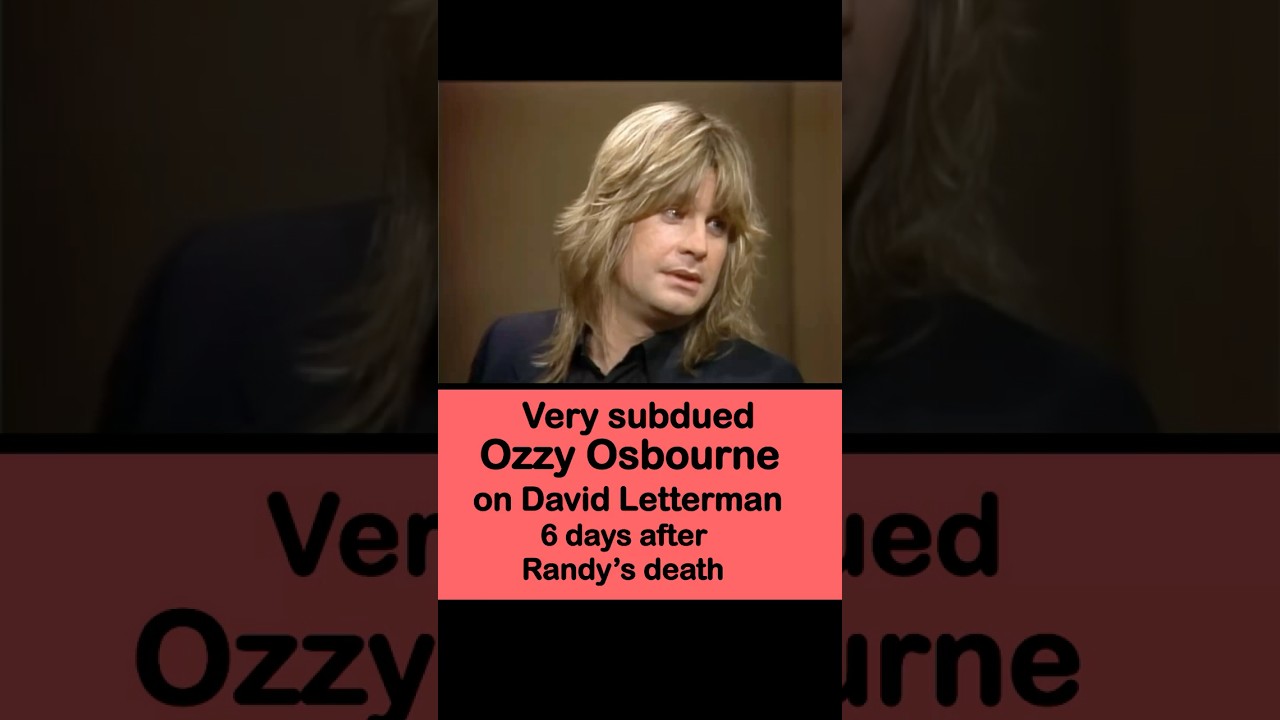
A cynic might see that as a political answer or a clever PR move, particularly in light of Sarzo’s comments that getting back on the road was effectively an exercise in damage limitation. But such a reading would also dismiss the clear pain emanating from Ozzy during the interview.
Immediately after his comments, Letterman pressed him for more details about the tragedy. Ozzy shut the conversation down.
“I don’t really want to talk about it at the moment,” he said.
As Sarzo, then Ozzy’s bass guitarist, explained on The David Ellefson Show, the singer needed to stay engaged with his career after the crash. The tour resumed on April 1, 1982, just 10 days after Rhoads’ death.
“Here was the strategy: Keep Ozzy moving. Do not cancel the tour,” Sarzo said.
“You cancel the tour, Ozzy goes home, Ozzy dies. Goes in the hole. So we gotta go back out there again. And then we're gonna pick it up here, 10 days later, after Randy passed away.”

The decision to keep the tour going did not mean the band’s guitar situation was settled. After Gary Moore famously turned down the chance to replace Rhoads, matters became complicated. Sarzo’s brother Robert was chosen for the gig, but Bernie Tormé had also been promised the role and paid in advance, forcing Robert Sarzo out of the picture.
Before the tour was over, Night Ranger guitarist Brad Gillis had entered the fray after a quickfire hotel-room audition and time spent with Rhoads’ final recordings. Gillis saw out the final stretch of a turbulent tour. His contributions can be heard on the Speak of the Devil live album, released in November 1982.

