
Eric Clapton says he made a “big, big mistake” selling two of the most important guitars of his career, even though he sold them for a cause close to his heart.
The 1964 Cherry Red Gibson ES-335 and “Blackie” — the legendary Stratocaster assembled with parts from a trio of 1956/’57 Strats — were among the guitars Clapton auctioned in 2004 to raise money for the Crossroads Centre, the addiction treatment facility he founded in Antigua. More than two decades later, he says he still struggles with letting them go.
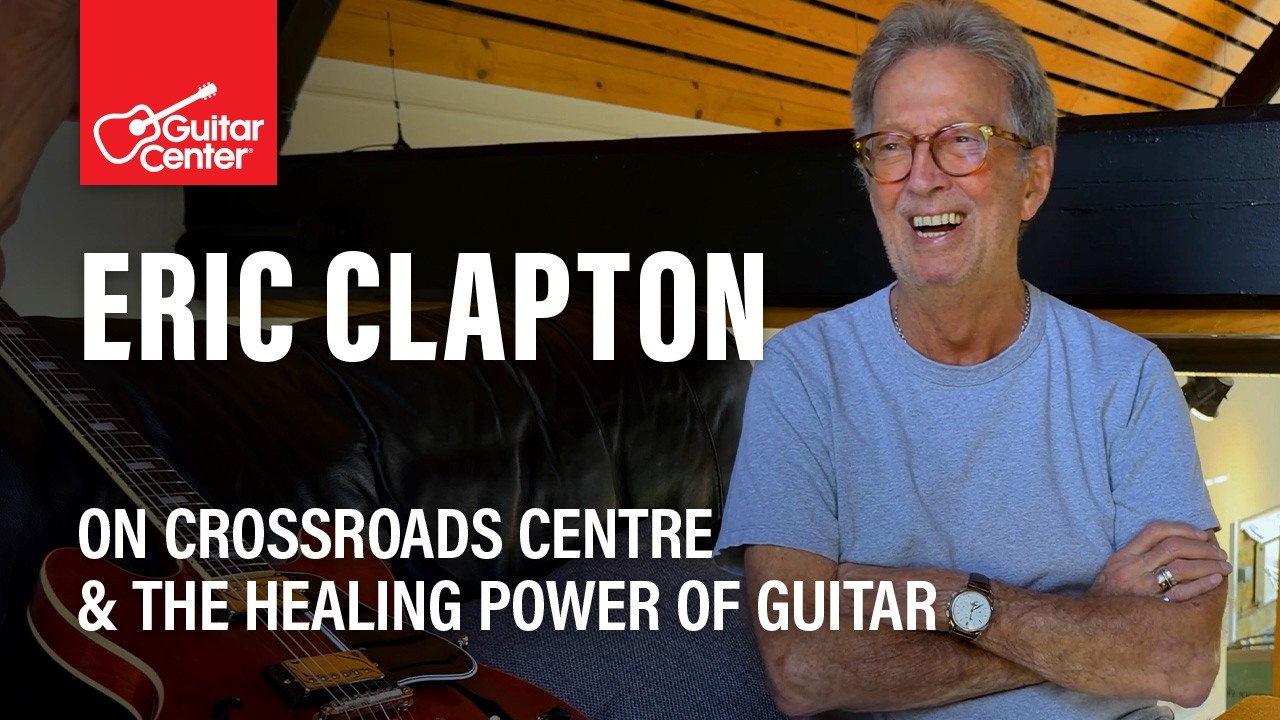
Speaking to Guitar Center, Clapton explains why guitars hold such significance for him.

“If you're in a bad place and you pick up a guitar there's a strong chance you’ll get out of that,” he says. “They're very sacred things to me.”
That makes the loss of Blackie and the ES-335 particularly difficult. Together, the guitars brought $1,807,000 at the 2004 auction, which raised $7.44 million in total, with approximately $6.4 million going to Crossroads.
But Clapton says he had to keep reminding himself why he was willing to part with them.
“When the auction was going on, I had to constantly keep saying, ‘This is your purpose. You are an alcoholic, and if you don't stay sober, you won’t be able to help other alcoholics to achieve sobriety,’” he says. “So this is all for that purpose. Crossroads is for that purpose. So I’m disproportionately obsessed with the survival of that place.
“My primary purpose is to stay sober, and help other alcoholics to achieve sobriety. That’s above me being a musician or a husband or a father. It’s the number one thing.”
The comments come as Clapton’s latest Crossroads Guitar Festival has once again put the cause in the spotlight. The event supports the Antigua-based treatment center, which Clapton established in 1998 following his own struggles with addiction.
The guitars he sold for it could hardly have been more significant to his career.
The ES-335 was a 1964 cherry-red model Clapton had acquired during his Yardbirds days and subsequently used with Cream. It featured during the band’s final run of performances in 1968, including their November show at London’s Royal Albert Hall. An Epiphone reissue of the guitar is reportedly due in 2027.

Blackie, meanwhile, became the defining Stratocaster of Clapton’s career. Inspired by his admiration for Jimi Hendrix and Steve Winwood, Clapton moved away from the Gibson Les Pauls he had favored and began playing Fender Stratocasters around 1970.
His first major Strat was a sunburst model known as “Brownie.” Blackie came together after Clapton bought six 1950s Strats from Sho-Bud in Nashville. He gave three to George Harrison, Pete Townshend and Winwood, then took the remaining three apart and assembled what he considered the best components into a single instrument.
“They were so out of fashion you could pick up a perfectly genuine Strat for two hundred or three hundred dollars,” Clapton said in the 2004 book The Stratocaster Chronicles. “So I bought all of them.”

Ahead of the auction that same year, Clapton described Blackie to Christie’s as an unusually personal instrument.
“It is such a personal thing,” he said. “I almost made this guitar myself – from different components, and I’ve never done that before or since.”
Blackie went on to become Clapton’s main guitar for years, appearing on recordings including “Cocaine,” “I Shot the Sheriff” and “Lay Down Sally.” Its history even includes a brief cameo from Todd Rundgren, who borrowed it onstage after breaking a string.
Clapton may never get either guitar back. But his latest comments make clear that, more than 20 years after the auction, he still feels the weight of what he gave up — even if he remains convinced of why he did it.

